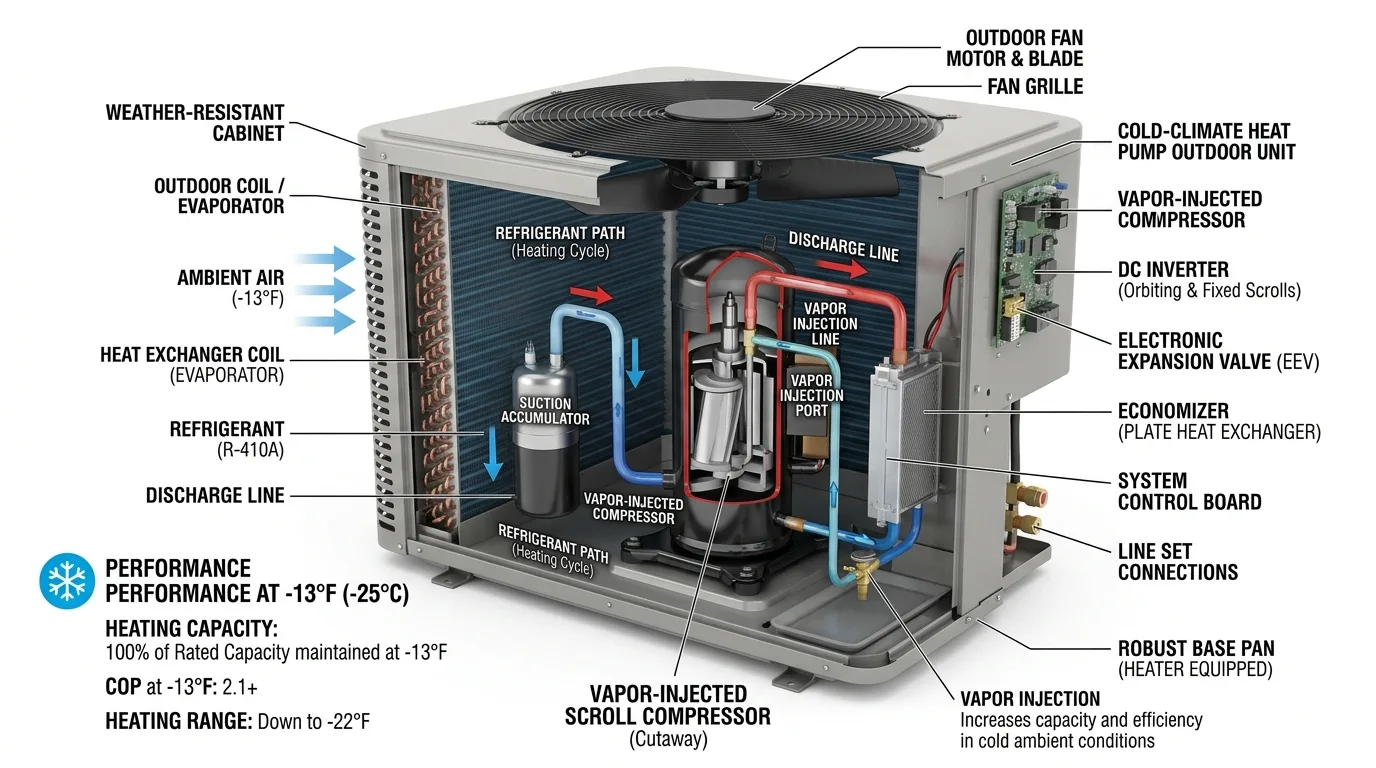
The heat pump vs. gas furnace question stopped being an efficiency debate in 2026. It became a policy and refrigerant story on top of a fuel-price story. Federal 25C credits sunset at the end of 2025 under the OBBBA. New AC and heat pump equipment now uses A2L refrigerant, which added roughly 15–30% to sticker prices. Meanwhile the underlying electricity-to-gas cost ratio still decides who wins the operating-cost fight in your zip code. Here are the numbers to work from.
Upfront Install: 2026 Ranges
| System | Typical 2026 installed cost | Notes |
|---|---|---|
| High-efficiency gas furnace (96% AFUE) + AC (16 SEER2) | $9,000–$14,000 | AC uses A2L refrigerant |
| Standard air-source heat pump (15 SEER2 / 8.1 HSPF2) | $8,500–$14,500 | A2L; may need panel upgrade |
| Cold-climate heat pump (NEEP-listed) | $12,000–$20,000 | Vapor-injection tech premium |
| Hybrid (heat pump + gas furnace) | $13,000–$22,000 | Two heat sources, one blower |
Two line items on the quote deserve attention. First, electrical panel upgrades — some homes need a 200A service or a heat pump load-management device before a heat pump can be added. That is $2,000–$5,000 that is not always included in the "heat pump" price. Second, ductwork static pressure — a modern variable-speed heat pump moves more air than a legacy furnace, and undersized returns can force a duct rework.
Operating Cost: The Electricity-to-Gas Ratio
Which system is cheaper to run depends on the ratio between your electricity price ($/kWh) and your natural gas price ($/therm). The break-even is when a heat pump's COP times the price of a therm's worth of electricity equals the price of a therm of gas divided by the furnace's AFUE.
A shorthand version:
- If your electricity is under ~3.5× the gas price per unit of heat, a heat pump wins on operating cost.
- If it is above roughly 4×, gas wins in the coldest months even for efficient heat pumps.
- Between those, it depends on outdoor temperature — the heat pump wins in fall and spring, gas wins on the coldest weeks. This is where hybrid dual-fuel systems exist.
The "Lukewarm Air" Complaint
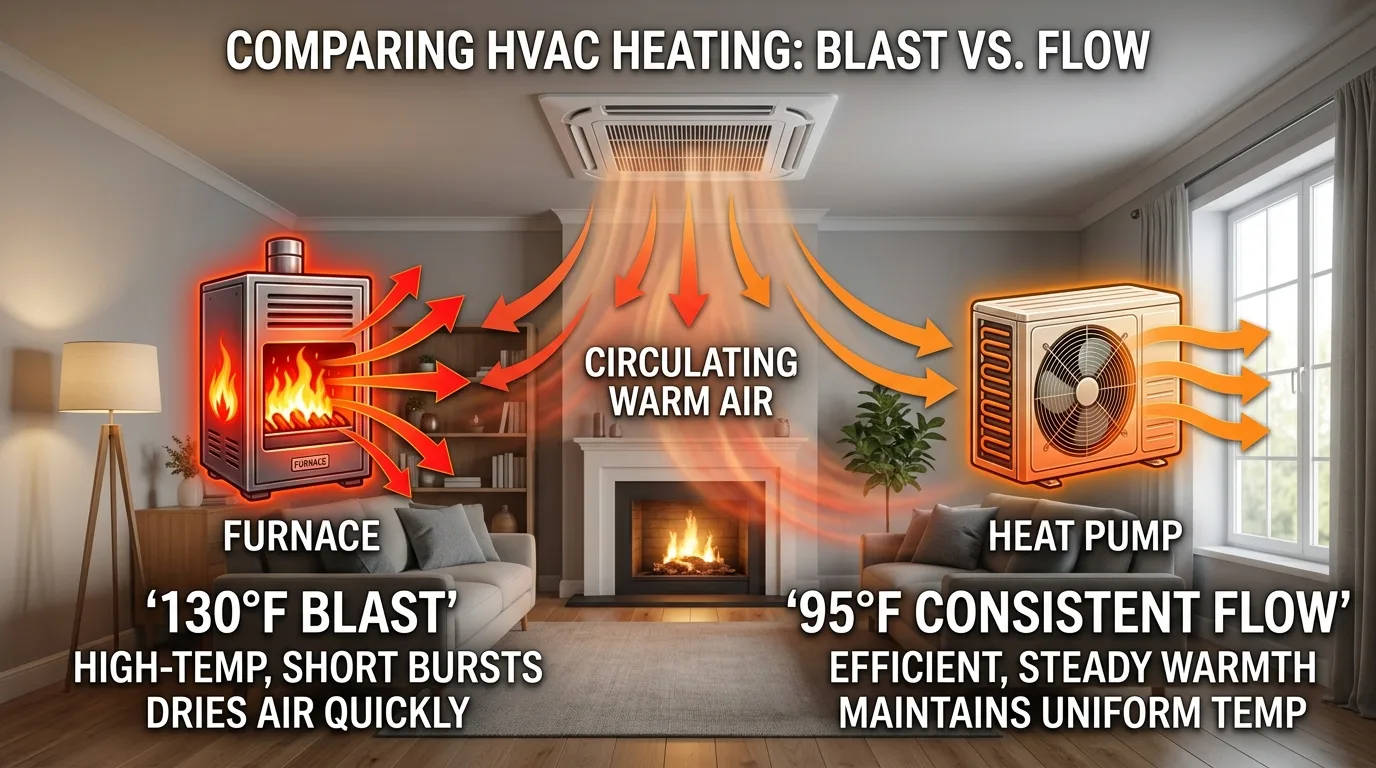
A common heat pump complaint is that supply air "feels cold." The physics is not that the room isn't heating; it is that heat pump supply air runs 90–100°F while a gas furnace runs 120–140°F. Human skin temperature is roughly 90–95°F, so anything at 90°F blown across your arm feels neutral or cool. Contractors who don't set expectations for this generate return calls that competitors chalk up to "bad units." Two mitigations exist:
- Longer, quieter runtime. Set the fan speed to keep supply near 100°F and let the system run continuously rather than cycling hard.
- Vent placement. Floor or low-wall registers hide the sensation; ceiling registers amplify it.
The 2025 Federal Credit Rewrite
The Section 25C credit had been scheduled to run through 2032 under the Inflation Reduction Act. The One Big Beautiful Bill Act, enacted mid-2025, sunset Section 25C and 25D credits for residential HVAC equipment placed in service after December 31, 2025. For a 2026 install:
- No federal 25C credit is available for equipment placed in service in 2026.
- State HEEHRA rebates — up to $8,000 for qualifying households — remain live where states have funded and launched their programs. Availability varies by state and by program capacity.
- Utility rebates — typically $500–$3,000 per qualifying heat pump — are still the most reliable incentive layer.
The Refrigerant Transition Cost
Both a new AC and a new heat pump in 2026 will use A2L refrigerant (R-32 or R-454B). That transition added 15–30% to equipment cost and drove new installation and service requirements — mandatory leak sensors, revised brazing, tools rated for A2L. That's not a heat-pump-vs-furnace factor per se; both AC systems and heat pumps carry it. But it matters for the "should I just do a straight AC replacement" question: the A2L premium is baked in either way. Full details are in our R-410A phase-out explainer.
The Fixed-Fee Story People Miss
If a heat pump lets you disconnect from natural gas entirely, you eliminate the utility's fixed monthly gas connection fee. That fee runs $20–$40/month in most U.S. markets — $240–$480/year — and it is charged regardless of usage. In markets with mid-range electricity prices, that fixed-fee elimination is often the deciding line item, not the per-therm math.
The 10-Year Cost Picture
Rough 10-year total-cost-of-ownership brackets for a 2,000-sq-ft house in a mixed climate, using 2026 assumptions:
| System | Install | 10-year energy | 10-year maintenance | Total |
|---|---|---|---|---|
| Gas furnace + new AC | $11,500 | $14,000 | $2,500 | $28,000 |
| Standard heat pump | $11,000 | $13,000 | $2,000 | $26,000 |
| Cold-climate heat pump | $16,000 | $11,000 | $2,000 | $29,000 |
| Hybrid dual-fuel | $17,000 | $11,500 | $3,000 | $31,500 |
The brackets are illustrative — actual numbers swing with local electricity rates and the winter design temperature. Where heat pumps clearly win: mild-to-cold climates, mid-range electricity prices, and the option to drop the gas connection. Where hybrid still wins: severe cold climates with cheap gas.
Field Guidance from Reddit
Two themes worth taking seriously from the r/heatpumps community:
- The brand matters less than the installer. A well-sized Goodman outperforms an oversized Mitsubishi.
- Ask for the Manual J. A contractor who won't produce one is guessing at your load. Guesses cost money for a decade.
Frequently Asked Questions
Is the 25C heat pump tax credit still available in 2026?
No. The residential 25C and 25D credits for HVAC equipment sunset on December 31, 2025 under the OBBBA. HEEHRA state rebates and utility incentives remain the primary 2026 incentive layer.
Why does heat pump air feel colder than furnace air?
Heat pump supply air runs 90–100°F, below human skin temperature (~95°F). Gas furnace supply air runs 120–140°F and feels distinctly warm. The room heats to the same setpoint either way; the perception is a real physics effect, not a defect.
Do I need to upgrade my electrical panel for a heat pump?
Sometimes. Homes with 100A service or heavily loaded 200A panels may need a service upgrade or a heat pump load-management device before adding the unit. Add $2,000–$5,000 to your quote if so.