The Short Answer: Why Your AC Runs Without Cooling
When your air conditioner is running but not cooling the house, the issue is typically caused by restricted airflow, dirty system components, or a refrigerant leak. If the system is blowing warm air, the indoor fan is working, but either the outdoor unit is not transferring heat properly, or the system cannot produce enough cold air to lower the indoor temperature.
Before calling an HVAC technician, you can check a few simple components yourself. Some issues, like a dirty air filter or incorrect thermostat settings, can often be resolved in minutes for little or no cost. Other problems, such as low refrigerant levels or a failing compressor, require specialized tools and professional expertise.
Quick Diagnostic Guide: DIY vs. Professional Fixes
To help you determine whether you can handle the problem yourself or need to schedule a service call, use this quick diagnostic breakdown:
| Symptom | Likely Cause | Recommended Action |
|---|---|---|
| Weak airflow, lukewarm air from vents | Clogged air filter | DIY (Replace filter immediately) |
| Warm air blowing, thermostat fan set to ON | Thermostat fan setting issue | DIY (Switch thermostat setting to AUTO) |
| Outdoor unit running, little to no cooling | Dirty AC condenser coils | DIY (Clean coils with a garden hose) |
| Ice on indoor coils or copper refrigerant lines | Frozen evaporator coil / Low refrigerant | Professional (Turn off AC to let it thaw) |
| Hissing or bubbling noises near the AC unit | Possible refrigerant leak (low Freon symptoms) | Professional (EPA certification required) |
Common Causes of an AC Running But Not Cooling
If your central air is blowing warm air, several components could be malfunctioning. Understanding how these parts work together makes troubleshooting home air conditioning much simpler.
1. Thermostat Set to ON Instead of AUTO
This is one of the most common reasons homeowners believe their AC is failing. When your thermostat fan is set to ON, the indoor blower fan runs continuously, even when the outdoor compressor is turned off. When the compressor is off, no cooling takes place, meaning the fan simply circulates uncooled, room-temperature air through your vents.
The Fix: Switch your thermostat fan setting to AUTO. This ensures the fan only runs when the system is actively cooling the air.
2. Clogged and Dirty Air Filter
An extremely dirty air filter blocks the airflow entering your HVAC system. When airflow is restricted, the indoor evaporator coil cannot absorb heat effectively. This can cause the coil to freeze over, turning into a block of ice that blocks cooling and, over time, can damage your compressor.
The Fix: Check your air filter. If it is grey, dusty, or clogged, replace it. During peak cooling season, many manufacturers recommend replacing filters roughly every 30 to 90 days, depending on filter type, pet ownership, and household size.
3. Dirty AC Condenser Coils (Outdoor Unit)
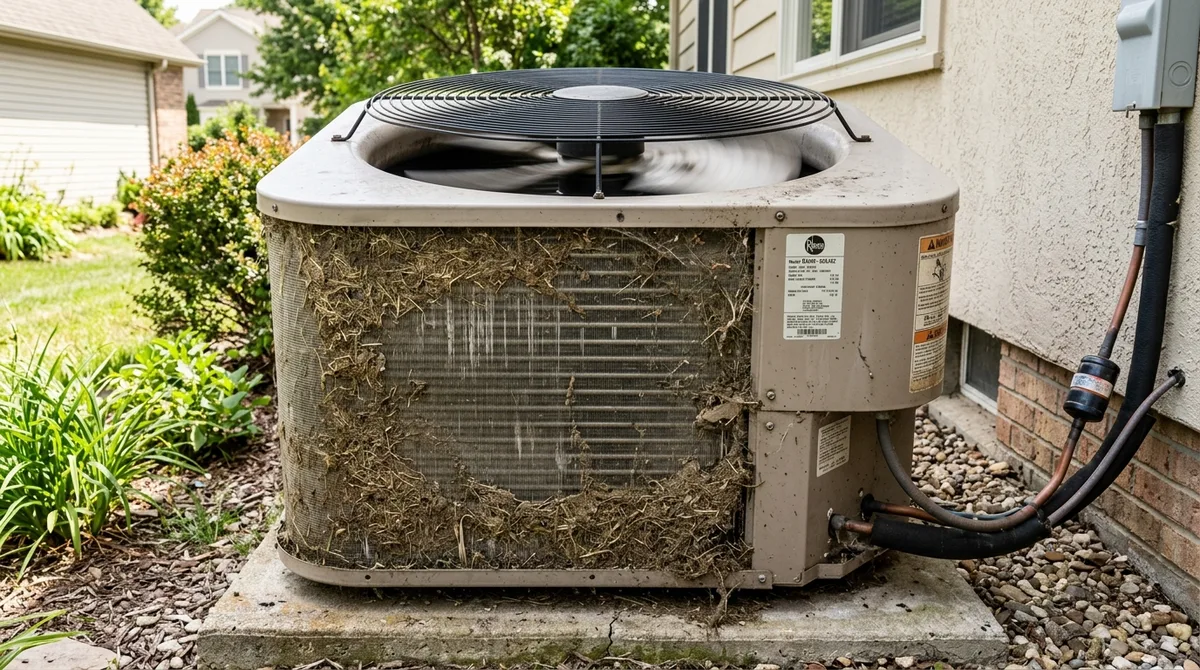
The outdoor unit of your central air system contains the condenser coils, which release the heat absorbed from inside your home into the outdoor air. Over time, these coils become coated with dirt, grass clippings, leaves, and pollen. When dirty AC condenser coils cannot release heat, the system runs constantly but struggles to cool your home.
The Fix: Turn off the power to the outdoor unit at the disconnect or breaker. Clear away any weeds, shrubs, or debris within about a two-foot radius of the unit. Gently spray the condenser coils with a garden hose, ideally from the inside out, to remove dirt buildup. Do not use a pressure washer, as this can bend the delicate aluminum fins.
4. Low Refrigerant Levels (Low Freon Symptoms)
Refrigerant is the fluid that circulates through your AC system to transfer heat. An air conditioner does not normally consume refrigerant; it operates in a closed loop. If your system is low on refrigerant, it usually means you have a leak. Common low Freon symptoms include:
- A hissing or bubbling sound coming from the indoor or outdoor unit.
- Ice forming on the copper refrigerant lines or the indoor evaporator coil.
- The AC running continuously without lowering the indoor temperature.
- Air blowing from the vents that feels lukewarm or warm.
The Fix: This requires professional intervention. Under United States EPA Section 608 regulations, only certified technicians are permitted to handle, repair, and recharge refrigerant systems. Simply adding refrigerant without repairing the underlying leak is a temporary fix at best.
5. Frozen Evaporator Coil (Indoor Unit)
The indoor evaporator coil absorbs heat from your home's air. If airflow is restricted (due to a dirty filter or closed vents) or if refrigerant is low, the coil temperature can drop below freezing. Moisture in the air then condenses on the coil and freezes, insulating the coil and preventing it from cooling your home.
The Fix: Turn off cooling at the thermostat immediately so the compressor stops. You can set the fan to ON (with cooling off) to help circulate air and speed up thawing, or simply leave the system off entirely. Do not run cooling while the coil is frozen, as this can damage the compressor. Once fully thawed, check and replace the air filter if needed. If the problem returns, call a professional.
Troubleshooting Home Air Conditioning: Step-by-Step Checklist
Before calling an HVAC technician, follow this step-by-step checklist to rule out simple issues:
- Verify Thermostat Settings: Ensure the thermostat is set to COOL and the temperature is set at least 5 degrees Fahrenheit below the current room temperature. Make sure the fan is set to AUTO.
- Inspect the Air Filter: Pull out your air filter and hold it up to a light source. If light cannot pass through it, replace it.
- Check the Circuit Breaker: Locate your home's electrical panel and look for breakers labeled AC, Air Conditioner, or HVAC. If a breaker has tripped to the middle position, flip it fully to OFF and then back to ON.
- Examine the Outdoor Unit: Confirm the outdoor condenser fan is spinning and that the unit is free of debris, leaves, and dirt.
- Check the Vents: Walk through your home and make sure most of your supply and return registers are open and unobstructed by furniture or drapes. Closing too many vents can restrict airflow and cause the system to freeze.
Estimated AC Repair Costs in the United States
If your troubleshooting steps do not resolve the problem, you will likely need to hire a professional. The ranges below are typical estimates for common AC repairs in the United States as of 2024/2025. Actual prices vary based on your geographic location, system size, brand, and accessibility, so treat these as general guidance rather than quotes.
| Service / Repair Type | Estimated Cost Range (USD) |
|---|---|
| Professional Diagnostic Service Call Fee | $75 - $200 (often applied toward repair cost) |
| AC Condenser Coil Cleaning | $150 - $350 |
| Refrigerant Leak Detection & Test | $200 - $600 |
| Refrigerant Recharge (R-410A) | Roughly $150 - $400 per pound; many systems hold about 6-15 lbs |
| AC Capacitor Replacement | $120 - $300 |
| AC Compressor Replacement | $1,500 - $3,500 (includes labor and parts) |
Always request a written estimate before authorizing any repairs, and ask whether the diagnostic fee is waived if you proceed with the recommended service.
Repair vs. Replacement: Making the Right Choice
If your air conditioner is running but not cooling, and you are facing a major repair bill (such as a failed compressor or a significant refrigerant leak on an older system), you may need to decide whether to repair or replace the unit.
Consider the following factors:
- The $5,000 Guideline: A common industry rule of thumb is to multiply the age of your AC unit by the estimated repair cost. If the result is greater than $5,000, replacement is often the more cost-effective long-term option. For example, a 12-year-old unit needing a $600 repair equals $7,200, which leans toward replacement. Treat this as a guideline, not a strict rule.
- System Age: The typical service life of a central air conditioner in the United States is often cited as 15 to 20 years. If your system is over 12 to 15 years old, investing in an expensive repair may only delay an eventual replacement.
- Refrigerant Type: If your system was manufactured before roughly 2010, it may use R-22 (often sold under the Freon brand), which has been phased out under environmental regulations. Servicing or recharging an R-22 system can be very expensive because supplies are limited.
- Energy Efficiency: Modern AC units generally have higher SEER2 (Seasonal Energy Efficiency Ratio 2) ratings than older models. Upgrading may reduce cooling-related energy use, though actual savings depend on your old system's condition, local climate, and usage patterns.
Safety and Urgency: When to Shut Off Your AC
While a warm house is uncomfortable, some AC issues can present safety hazards. Shut off your system at the thermostat and the circuit breaker right away if you notice any of the following:
- Burning Odors or Smoke: A burning plastic or electrical smell can indicate overheating wiring, a seized fan motor, or electrical failure.
- Loud Screeching or Clanging: Metal-on-metal sounds can indicate a failing compressor or a loose blower wheel, which may cause further damage if the system keeps running.
- Loud Continuous Hissing: A strong, continuous hiss can indicate a high-pressure refrigerant leak. Ventilate the area and avoid confined-space exposure; refrigerant can displace air in poorly ventilated spaces.
- Constant Short-Cycling: If the system turns on and off every few minutes, it can stress the compressor and lead to a more expensive repair over time.
Frequently Asked Questions
Why is my AC running but blowing warm air?
If your AC is running but blowing warm air, the most common causes are a thermostat fan set to ON instead of AUTO, a clogged air filter restricting airflow, dirty outdoor condenser coils, or a refrigerant leak. Check your thermostat and air filter first before calling a professional.
How do I know if my AC is low on Freon?
Common signs of low refrigerant (Freon) include ice buildup on the indoor evaporator coil or outdoor copper lines, a bubbling or hissing sound near the unit, lukewarm air blowing from the vents, and the system running continuously without cooling the home. A certified technician can confirm and repair the underlying leak.
Can a dirty air filter cause my AC to stop cooling?
Yes. A dirty air filter can severely restrict airflow, which prevents the indoor evaporator coil from absorbing heat properly. This can cause the coil temperature to drop and lead to ice buildup that blocks cooling and, over time, may damage the compressor.
How often should I clean my outdoor AC unit?
A good practice is to clean your outdoor condenser unit at least once a year, ideally in spring before the heavy cooling season begins. Clear away debris, weeds, and leaves, and gently rinse the coils with a garden hose after shutting off power to the unit.
Is it safe to run my AC if it is not cooling?
Generally no. If your AC is running but not cooling, it is safer to turn it off. Running a malfunctioning system can damage expensive components like the compressor, potentially turning a low-cost repair into a much larger one.