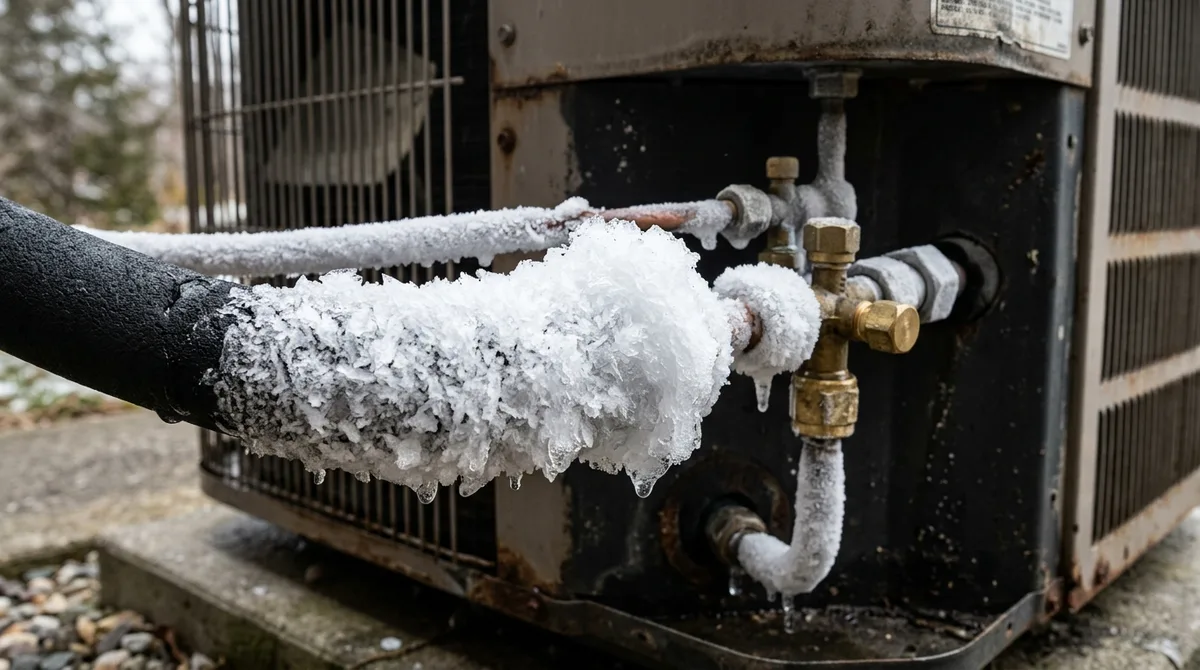
Quick Answer: Why is Your Outdoor AC Unit Freezing?
Ice builds up on outdoor AC coils most often because of restricted airflow or low refrigerant levels. When air cannot flow properly over your indoor evaporator coil, or when refrigerant drops because of a leak, the system's operating temperature can fall below freezing. Moisture in the air then freezes on the indoor coil, and in many cases the ice spreads along the copper refrigerant lines toward the outdoor unit.
If you notice ice on your outdoor unit, it is best to turn off your air conditioner at the thermostat. Running a frozen system can damage your compressor, which is typically the most expensive component of your HVAC system to replace.
How an Indoor Problem Causes Outdoor Ice
It is a common misconception that the outdoor unit freezes up on its own. In most summer cooling scenarios, the freezing process actually begins inside your home at the evaporator coil.
Your air conditioner works by absorbing heat from your indoor air using cold refrigerant. If the system cannot absorb enough heat, the refrigerant temperature can drop below 32 degrees Fahrenheit. Moisture from your indoor air condenses on the cold coil and freezes. Over hours of operation, this ice can accumulate, further block airflow, and travel along the insulated copper suction line (the thicker refrigerant pipe) toward the outdoor condenser unit.
The 5 Most Common Causes of Ice on Outdoor AC Coils
Understanding the root cause of the freeze-up helps you decide whether you can resolve the issue yourself or need to schedule a professional HVAC repair.
1. Restricted Airflow (The Most Common Culprit)
For your AC to run safely, a steady volume of warm indoor air must pass over the cold evaporator coil. If that airflow is restricted, the refrigerant can stay too cold, leading to ice formation. Common causes of blocked airflow include:
- Dirty Air Filters: A heavily clogged air filter acts as a barrier, choking the system's airflow.
- Blocked or Closed Vents: Closing too many supply registers or blocking return-air grilles with furniture can disrupt system pressure and airflow.
- Dirty Evaporator Coil: Over time, dust and pet dander can bypass filters and coat the indoor coil, insulating it from the warm indoor air.
- Failing Blower Motor: If the indoor fan motor is weak or has stopped spinning, warm air cannot be pushed across the coil.
2. Low Refrigerant Levels (Leaks)
A common myth is that air conditioners consume refrigerant over time. In reality, refrigerant operates in a closed, pressurized loop. If your system is low on refrigerant, you most likely have a leak.
When refrigerant levels drop, the pressure inside the evaporator coil decreases, and lower pressure generally corresponds to a lower coil temperature. The coil can become cold enough that ambient moisture freezes on it. Signs of a possible refrigerant leak include a bubbling or hissing sound near the lines, lukewarm air from your vents, and rising energy bills.
3. Dirty Condenser Coils (Outdoor Unit)
While the freeze usually starts indoors, a severely dirty outdoor condenser coil can also contribute to system imbalances. If the outdoor unit is choked by grass clippings, leaves, dirt, or pollen, it cannot dissipate heat effectively. This can strain the compressor and lead to abnormal system pressures that may contribute to freezing under certain operating conditions.
4. Running the AC in Low Outdoor Temperatures
Air conditioners are generally designed to operate when outdoor temperatures are warm, often above roughly 60 to 65 degrees Fahrenheit. If you run the AC during cool spring or autumn nights, system pressures can drop. Because the outdoor air is already cool, the system may struggle to maintain proper operating pressures, which can cause the coils to drop below freezing and ice over.
5. Defrost Cycle Failure (For Heat Pumps in Winter)
If you have a heat pump rather than a standard air conditioner, seeing frost or light ice on the outdoor unit during winter is normal. Heat pumps extract heat from the outdoor air, which causes moisture to freeze on the outdoor coils.
To manage this, heat pumps periodically enter a 'defrost cycle' where they temporarily reverse operation to warm the outdoor coils and melt the ice. However, if your heat pump becomes encased in thick, solid ice during winter, the defrost system may have failed. Common causes include a faulty defrost control board, a bad outdoor temperature sensor, or a malfunctioning reversing valve.
Step-by-Step: How to Safely Thaw Your Frozen Air Conditioner
Before any diagnostics or repairs can take place, you need to completely thaw the ice. Running the system while frozen risks damaging your compressor, which can be costly to replace.
- Turn Off the Cooling: At your thermostat, switch the system from 'Cool' to 'Off'.
- Turn On the Fan: Switch your thermostat's fan setting from 'Auto' to 'On'. This runs the indoor blower continuously, blowing warm indoor air over the frozen coil to help speed up thawing.
- Check the Air Filter: While the system thaws, slide out your air filter. If it is dirty, replace it.
- Monitor the Water: As the ice melts, it will produce a significant amount of water. Make sure your condensate drain line is clear and the drain pan is not overflowing.
- Wait Patiently: Depending on the amount of ice, thawing can take anywhere from a couple of hours to a full day. Do not scrape ice off the coils with screwdrivers, knives, or other sharp tools, as you can easily puncture the copper refrigerant lines.
DIY Troubleshooting vs. When to Call an HVAC Professional
Some causes of a frozen AC can be handled safely by homeowners, while others require specialized tools and licensing.
What You Can Safely Check and Fix (DIY)
- Replace the Air Filter: If a dirty filter was the cause, replacing it and letting the system thaw may resolve the issue.
- Open Your Vents: Keep the large majority of your supply registers open and unobstructed by furniture, drapes, or rugs.
- Clear Outdoor Debris: Maintain a clear space of roughly two feet around your outdoor condenser by removing weeds, leaves, and encroaching shrubs. You can gently rinse dirt off the outdoor coils with a garden hose (avoid a pressure washer, which can bend the delicate aluminum fins).
When to Call a Licensed HVAC Technician
- Refrigerant Issues: In the United States, handling, testing, and recharging refrigerant generally requires EPA Section 608 certification. It is unsafe and, for uncertified individuals, not permitted to handle refrigerant.
- Electrical and Motor Failures: If your blower motor is dead or your defrost board is faulty, a professional should diagnose and replace the components safely.
- Persistent Freezing: If you change the filter and the system freezes up again within a few hours, shut it down and call a pro to help prevent compressor damage.
Estimated Costs to Fix a Frozen AC Unit
The cost to resolve a frozen AC depends on the underlying cause. Simple airflow issues may cost only the price of a new filter, while major component failures can be expensive. The ranges below are rough U.S. estimates and can vary widely.
| Service / Repair Type | Estimated Cost Range (U.S. Average) |
|---|---|
| Standard HVAC Diagnostic Fee | $75 – $200 |
| Replacement Air Filter (DIY) | $10 – $40 |
| Professional Evaporator Coil Cleaning | $150 – $400 |
| Refrigerant Leak Detection & Repair | $200 – $1,500 (depending on leak location) |
| Refrigerant Recharge (R-410A) | $150 – $600 |
| Blower Motor Replacement | $400 – $900 |
| AC Compressor Replacement | $1,500 – $3,000+ |
Note: These figures are general estimates only. Actual prices vary significantly based on your geographic location, local labor rates, brand, and the age of your system. Older systems using R-22 refrigerant (which has been phased out for new production in the United States) may face substantially higher recharge costs due to limited supply. Always confirm pricing with a local licensed contractor.
How to Prevent Ice Build-up on Your AC Coils
Preventative maintenance is the most effective way to avoid a frozen system and help extend the lifespan of your air conditioner. A few habits go a long way:
- Set a Filter Reminder: Replace standard 1-inch pleated filters roughly every 30 to 90 days. If you have pets or allergies, check them monthly.
- Schedule Annual Professional Maintenance: Have a licensed technician inspect your system each spring. They can check refrigerant levels, clean the coils, test electrical components, and confirm the condensate drain is clear.
- Keep Outdoor Units Clear: Regularly trim back vegetation and remove leaves or debris around your outdoor condenser.
- Avoid Running AC in Cool Weather: If outdoor temperatures drop below about 60 degrees Fahrenheit, consider turning off the AC and opening your windows instead.
Frequently Asked Questions
Can I run my AC if the outside unit is frozen?
No, you should not run your air conditioner while the outside unit is frozen. Running a frozen AC strains the compressor and can lead to overheating and permanent failure. Turn the system off and let it thaw completely before troubleshooting.
How long does it take to thaw a frozen AC unit?
Thawing a frozen AC unit typically takes somewhere between a couple of hours and a full day, depending on how much ice has formed and the outdoor temperature. You can help speed it up by setting the thermostat to 'Off' and the system fan to 'On'.
Why is my heat pump freezing up in the winter?
A light layer of frost is normal on a heat pump in winter. Heavy ice build-up usually points to a problem, such as a failed defrost cycle, a faulty defrost control board, a bad sensor, or a malfunctioning reversing valve that prevents the system from shedding ice.
Will a dirty air filter cause the outside unit to freeze?
Yes, a dirty air filter is one of the most common causes of a frozen system. It restricts airflow across the indoor evaporator coil, which can drop the coil temperature below freezing. That ice can then travel along the refrigerant lines toward the outdoor unit.
How do I know if my frozen AC is caused by low refrigerant?
If you replace the air filter, open your vents, thaw the system completely, and it freezes up again shortly after you restart it, low refrigerant is a likely cause. You may also hear a hissing or bubbling sound near the refrigerant lines. A licensed technician can confirm with proper testing.