The Quick Answer: Can Vinegar Clear a Clogged AC Drain Line?
Yes, you can use distilled white vinegar to help clear and maintain your air conditioner's condensate drain line. The natural acidity of vinegar (typically around 5% acetic acid) helps break down and discourage the algae, mold, mildew, and bacterial slime that tend to build up inside the dark, damp PVC pipe.
There is one important distinction to make before you begin: vinegar works well as a sanitizer and preventive treatment, but it will not dissolve a dense, solid physical blockage. If your drain line is packed with a thick plug of dust, pet hair, and hardened sludge, pouring vinegar on top of it usually will not clear the line right away. In those cases, you should first physically flush or vacuum out the clog, then use vinegar to sanitize the pipe and help prevent future blockages.
Symptoms of a Clogged AC Condensate Drain Line
Your air conditioning system removes moisture from your indoor air as it cools. This moisture collects on the evaporator coil, drips into a condensate pan, and flows outside through a small PVC pipe. When this pipe becomes clogged, the water has nowhere to go. Watch for these common warning signs:
- AC leaking water inside: You notice water pooling around the indoor air handler, furnace closet, or dripping from the ceiling or walls near the unit.
- The system shuts off unexpectedly: Many modern HVAC systems have a safety float switch on the drain line. If water backs up, the switch can trigger and cut power to the AC to help prevent indoor flooding.
- Musty or moldy odors: Standing water in the drain pan or line can breed mold and bacteria, pushing sour, musty air through your home's supply vents.
- Water dripping from the secondary drain line: If you see water dripping from a pipe protruding through your outdoor soffit or eaves, your primary drain line may be blocked and the system is using its emergency backup drain.
Why Vinegar is Often Preferred Over Bleach for AC Pipes
While some sources suggest using household bleach to clear drain lines, many HVAC professionals advise against it. Bleach is more corrosive and can present risks to your heating and cooling system:
| Feature | Distilled White Vinegar | Household Bleach |
|---|---|---|
| Corrosiveness | Mildly acidic; generally considered safe for PVC and ABS drain lines. | More corrosive; can degrade plastics, glue joints, and metal over time. |
| Evaporator Coil Risk | Low risk when used as directed in the drain line. | Harsh fumes and backflow can be hard on delicate coil fins. |
| Environmental Safety | Biodegradable and lower-toxicity at the outdoor exit point. | Can harm grass, shrubs, and soil microbes where the line discharges. |
Step-by-Step Guide: How to Clear the Line with Vinegar
Follow these steps to safely clean and flush your AC condensate drain line using distilled white vinegar. If your system has triggered a safety switch and is full of standing water, complete Step 4 first to remove the standing water.
What You Will Need:
- 1/2 to 1 cup of distilled white vinegar (about 5% acidity)
- Warm water
- A funnel
- A wet/dry shop vacuum (helpful for stubborn clogs)
- A clean rag or towel
Step 1: Turn Off the Power
For your safety, shut off your air conditioning system before working on it. Turn it off at the thermostat first, then locate your main electrical panel or the indoor furnace/air-handler breaker and switch it to the off position. If you are ever unsure about the electrical shutoff, stop and consult a licensed HVAC technician.
Step 2: Locate the Condensate Drain Line and Access Port
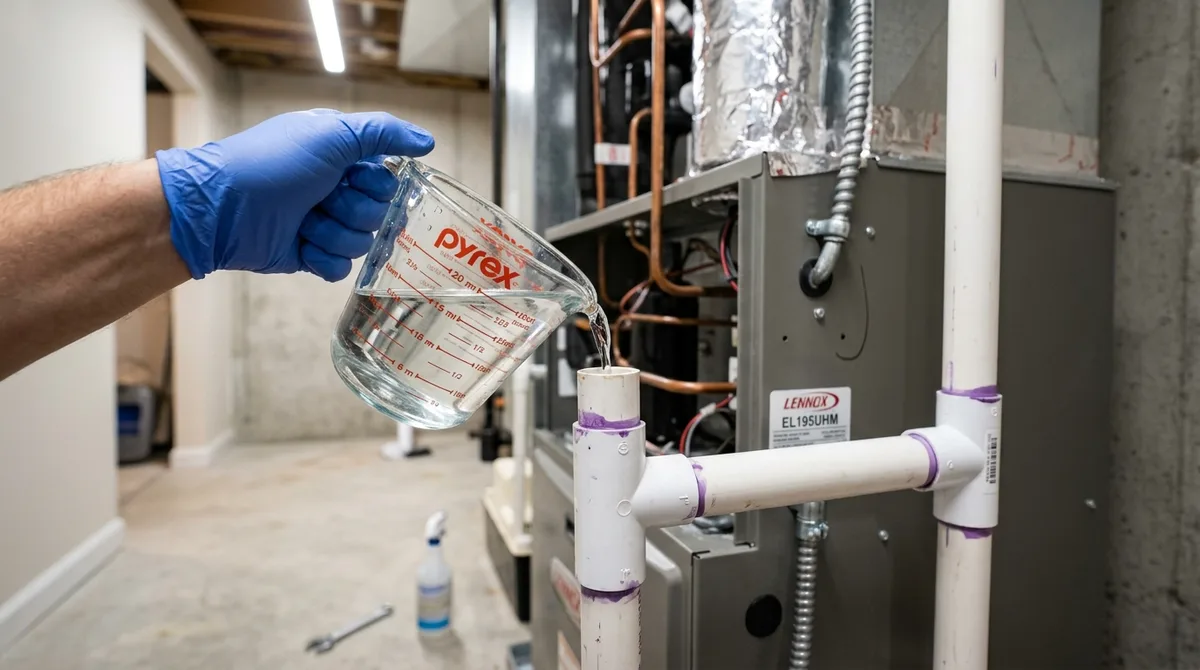
Go to your indoor air handler (usually in a closet, basement, attic, or garage). Look for a white PVC pipe running from the unit. Near the unit you should see a T-shaped pipe fitting with a small cap on top. This is your drain line access port, often called a cleanout tee. If the cap lifts off easily, remove it. If it is glued shut, do not force it; you may need to access the line through the drain pan inside the cabinet or call a professional.
Step 3: Inspect the Line for Standing Water
Look inside the access port. If water is filled to the very top of the pipe, you likely have a complete blockage downstream. If the pipe is empty or only slightly damp, you can proceed directly to pouring the vinegar.
Step 4: Vacuum Out the Clog (If Standing Water is Present)
If the line is completely backed up, pouring vinegar on top of the water will only dilute it and will not reach the clog. In that case:
- Go outside and locate the end of the PVC drain line, often near your outdoor condenser unit.
- Attach the hose of a wet/dry shop vacuum to the end of the PVC pipe. Wrap a damp rag around the connection to create a tighter seal.
- Run the vacuum for 1 to 2 minutes. This can pull the clog, standing water, and built-up algae out of the pipe and into the vacuum canister.
Step 5: Pour the Vinegar
Insert your funnel into the indoor access port and slowly pour 1/2 to 1 cup of distilled white vinegar down the line.
Step 6: Let It Sit
Allow the vinegar to sit in the line for about 30 minutes to an hour. This gives the acetic acid time to break down organic slime and loosen algae buildup.
Step 7: Flush with Warm Water
After the vinegar has sat, slowly pour a pitcher of warm (not boiling) water down the access port. Boiling water can warp or crack PVC and may soften the cement holding joints together. The warm-water flush helps sweep away loosened debris and confirm the line drains freely to the outdoors.
Step 8: Replace the Cap and Restore Power
Put the cap back on the access port (do not glue it shut, since you will need access again). Restore power at the breaker and set your thermostat to cool. Monitor the indoor unit over the next 24 hours to make sure the leaking has stopped.
DIY vs. Professional HVAC Service
Clearing minor algae buildup or performing routine vinegar flushes is a reasonable DIY task for many homeowners. Some situations, though, call for professional diagnostic tools and expertise.
When DIY is usually fine:
- You are performing routine seasonal maintenance.
- The AC is running normally and you simply want to prevent future clogs.
- The clog clears easily using a wet/dry shop vacuum from the outside.
When to call a professional:
- The clog remains stuck even after vacuuming and flushing the line.
- You notice active water damage on ceilings, drywall, or flooring.
- The drain line is essentially inaccessible (for example, buried in a tight crawlspace or high attic).
- Your evaporator coil is heavily iced over or dirty, which may require specialized cleaning.
- You suspect an electrical issue with the condensate pump or safety float switch.
Cost of Unclogging an AC Condensate Line
Understanding the likely costs can help you decide whether to handle this yourself or hire a local HVAC technician. The figures below are general estimates, not quotes.
- DIY cost (roughly $5 to $30): If you already own a wet/dry vacuum, your main expense is a gallon of distilled white vinegar. If you need a vacuum adapter or a flexible pipe brush, expect to spend a bit more.
- Professional cost (commonly around $75 to $250): A standard service call to clear a clogged condensate line often falls in this range, depending on your location, how accessible the unit is, and whether it is a regular or emergency visit.
- Additional repairs (can reach several hundred dollars or more): If the clog caused water to back up into the furnace or damage drywall, or if the condensate pump failed and needs replacement, total costs can rise significantly.
Note: These cost ranges are rough estimates based on typical U.S. residential HVAC service and can vary widely by region and provider. Always request a written estimate before authorizing professional repairs.
Preventive Maintenance: Keeping Your Drain Line Clear
The best way to handle a clogged AC drain line is to prevent it in the first place. Build these simple steps into your home maintenance routine:
- Perform periodic vinegar flushes: Pour about 1/2 cup of distilled white vinegar down your access port every 30 to 90 days during the cooling season to discourage algae and mold.
- Change your air filters regularly: Replace HVAC air filters roughly every 30 to 90 days. A dirty filter lets dust and pet dander reach the wet evaporator coil, where it can wash into the drain line and form sludge.
- Install a safety float switch: If your system lacks one, an HVAC technician can add a condensate overflow switch that shuts down the AC if the drain line clogs, helping prevent water damage.
- Schedule annual professional tune-ups: Have a licensed HVAC technician inspect and clean your system once a year, ideally in spring. They can flush the drain line, inspect the condensate pan, and check the coils.
Frequently Asked Questions
Can I use apple cider vinegar instead of white vinegar?
It is best to use distilled white vinegar. Apple cider vinegar contains natural sugars and organic sediments that can feed bacteria and mold inside the dark drain line, which may worsen buildup over time.
Will vinegar damage my AC's PVC drain pipes?
Distilled white vinegar is a mild acid and is generally considered safe for PVC and ABS drain lines when used as directed. It is not expected to degrade the plastic or the solvent cement used at the joints.
How often should I put vinegar down my AC drain line?
For prevention, pouring about 1/2 cup of distilled white vinegar down the drain line every 30 to 90 days during the high-use cooling season is a common recommendation. In humid climates, more frequent treatment can be especially helpful.
Can I use baking soda and vinegar together in my AC drain?
This combination is not recommended for AC condensate lines. The foaming reaction can push dirty water backward toward the indoor evaporator coil pan, which may cause an overflow or affect nearby components.
Why is my AC still leaking after I cleared the line with vinegar?
If your AC keeps leaking, the clog may be deeper in the line, the condensate pump may have failed, or the evaporator coil may be frozen due to low refrigerant or restricted airflow. Shut off the system and call a licensed HVAC technician to diagnose the issue.