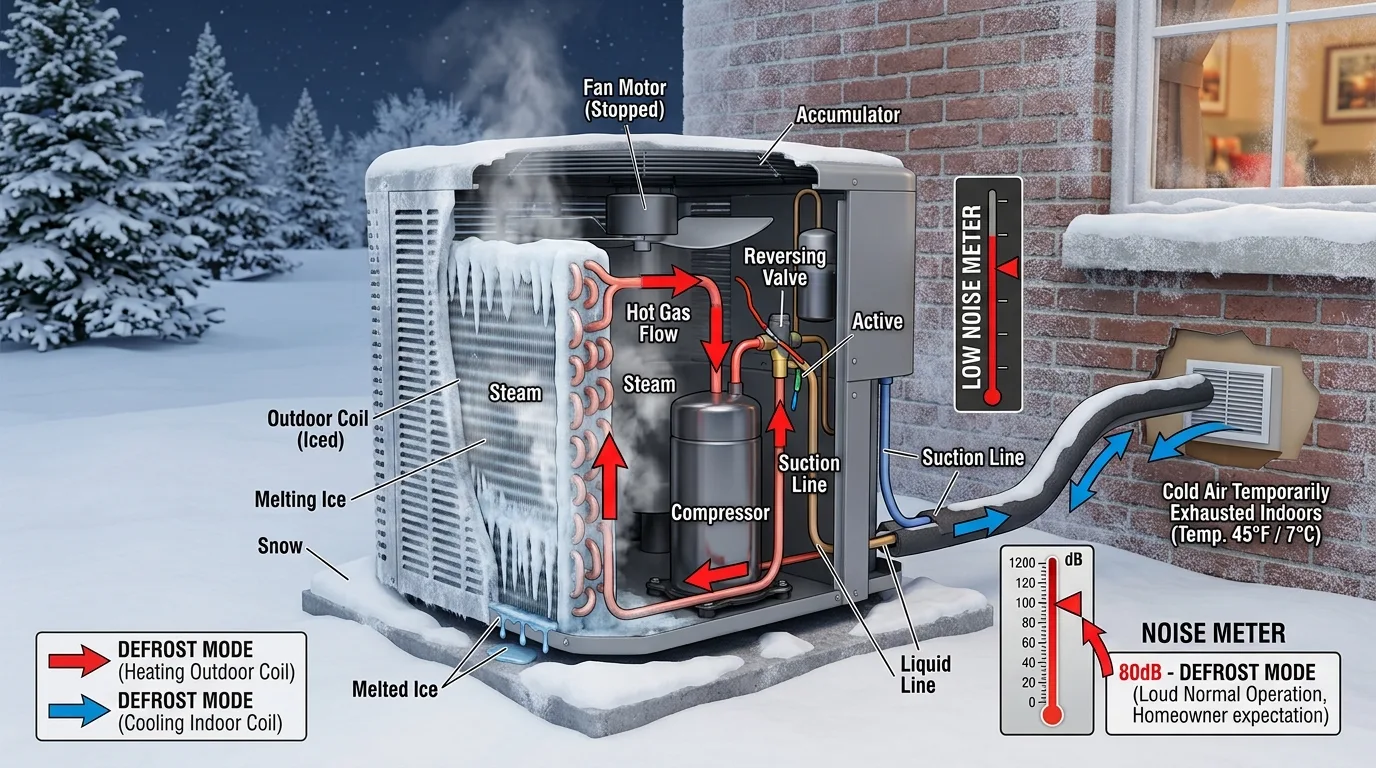
The mini-split vs. central-ducted framing is a false binary. In 2026, the honest answer to "which heat pump layout is right for my house" pulls in three options — wall-mounted ductless, central ducted, and the "concealed ducted" mini-split most articles don't mention — and a redundancy question most homeowners never think to ask. Here is the layout logic, with the trade-offs the marketing pages skip.
The Three Real Options
| System | Best for | Efficiency | Aesthetic |
|---|---|---|---|
| Ductless wall-mounted mini-split | Open-plan rooms, additions, ADUs, retrofits without ductwork | Highest — no duct loss | Visible indoor head |
| Concealed ducted mini-split ("ghost" system) | Multi-room zones, attic-adjacent floors, remodels | Near-ductless — short duct runs | Hidden — flush ceiling or wall grilles |
| Central ducted heat pump | Homes with intact, right-sized ductwork | Lower — duct losses to unconditioned space | Standard supply/return registers |
The "Ghost" System Most Contractors Don't Push
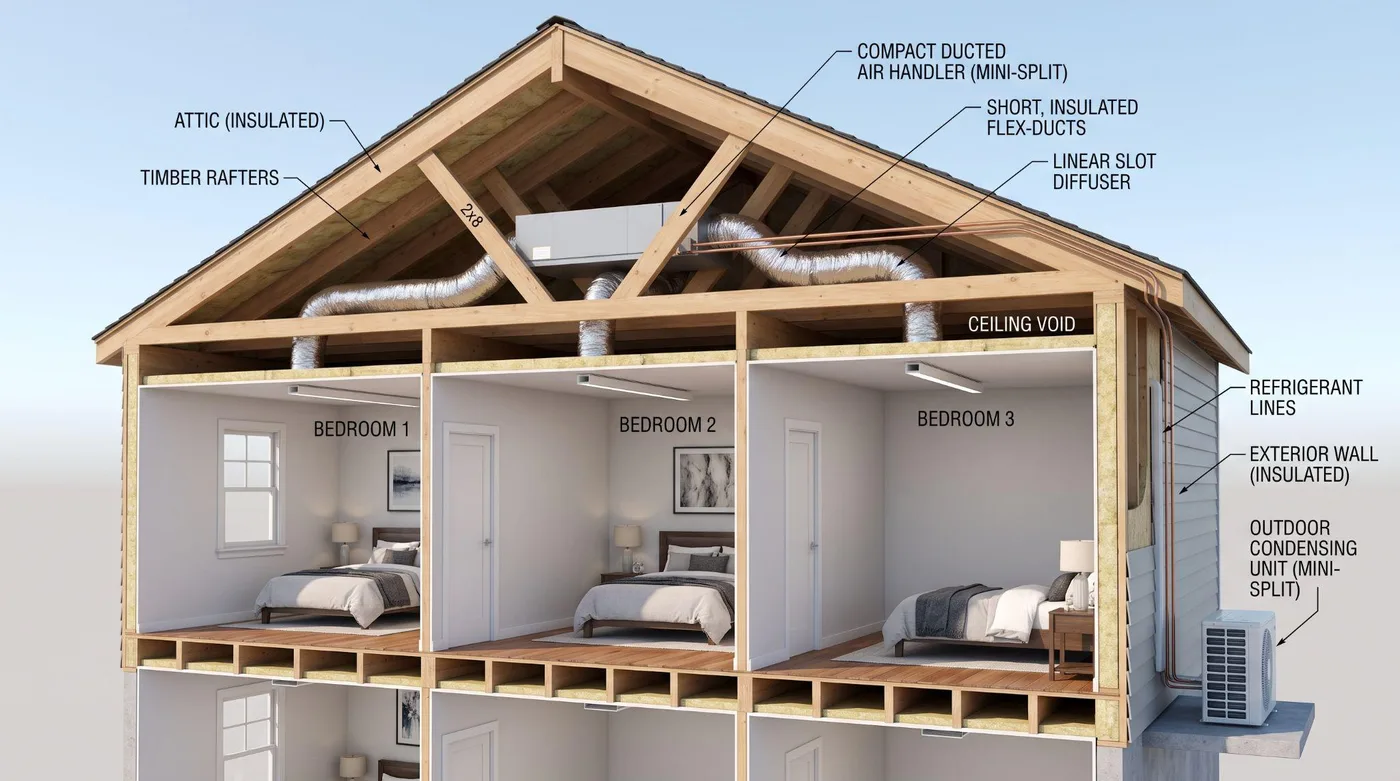
A concealed ducted mini-split is a compact air handler (typically 12–24 inches deep) mounted inside a soffit, an attic, or above a closet. Short insulated flex ducts run to discreet slot diffusers or standard grilles in adjacent rooms. It gives you:
- The efficiency of a ductless zone (no long, leaky supply runs)
- The invisible aesthetic of central air (no wall heads)
- Zoning at the air-handler level — one handler serves 2–5 rooms with common comfort needs
The trade is installer skill. A concealed ducted mini-split requires a real duct design — static pressure, run length, diffuser placement — that most residential HVAC crews don't practice. Ask specifically what static pressure the manufacturer's data sheet allows and what the installer measured after commissioning.
Layout by Home Type
Ranch, open plan
One or two ductless heads in the main living area, plus concealed ducted zones for bedrooms. Heat rises, and ranches suffer from "hot head, cold feet" with ceiling-only supply — low-wall or floor-console indoor units are dramatically better for heating.
Two-story colonial
The right answer is almost always two systems, one per floor. A single central system with a damper zoning board is a compromise that either underventilates the upstairs in summer or leaves it cold in winter. Two independent outdoor units cost more upfront and are dramatically more comfortable and more efficient.
Older home, no ductwork
Wall-mounted ductless heads in the main rooms; look at concealed ducted mini-splits for a group of bedrooms rather than one head per bedroom (three heads to serve three bedrooms is often less comfortable than one concealed handler with three ducts).
ADU or addition
A single-zone ductless mini-split, sized to the room's Manual J. Multi-zone doesn't buy anything here.
Multi-Zone vs. Multiple Single-Zones: The Redundancy Question
A multi-zone outdoor unit powers 2–5 indoor heads from one compressor. The efficiency-on-paper argument favors it. The reality argument on the r/heatpumps subreddit favors multiple single-zone units for one reason: survivability. If a single inverter board fails on a multi-zone unit, the entire house is without heating and cooling. Two independent single-zone units at half the size each means one failure knocks out half the house, not all of it.
Two operational realities to add:
- Multi-zones underperform at low load. A 3-ton multi-zone running one head at 20% output cycles inefficiently. Single-zones modulate more cleanly.
- Multi-zones share refrigerant. One leak means every head goes down.
The Defrost Cycle: Set Expectations
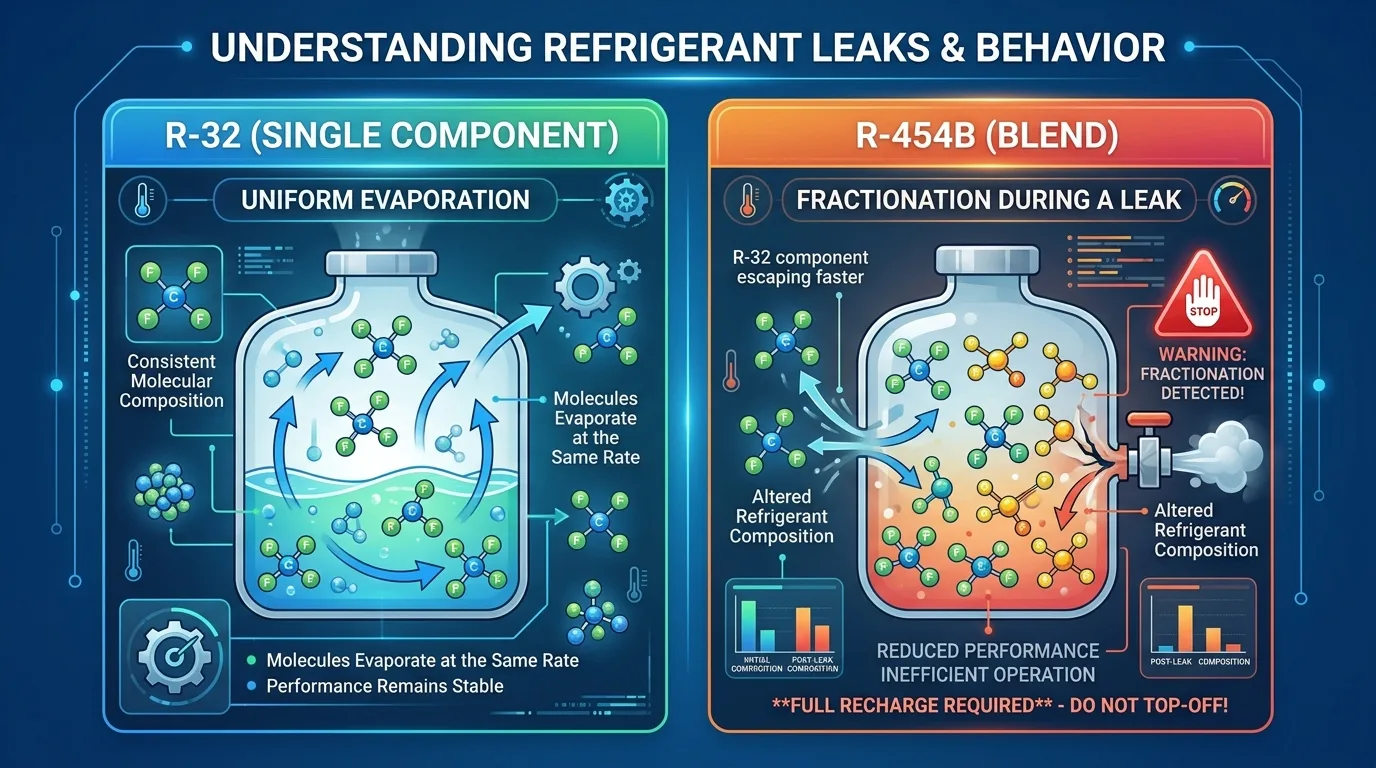
Every heat pump reverses periodically to melt frost off the outdoor coil. During defrost, the indoor unit blows briefly cool air (or shuts off), and the outdoor unit is noticeably louder — often 75–85 dB at 3 feet. That is not a defect. What is a defect: defrost cycles triggered by an ambient-temp sensor rather than actual frost, which some Mitsubishi Hyper-Heat firmware versions have done, wasting energy on unnecessary cycles. Ask your installer to check firmware version at commissioning.
SEER2 and HSPF2: The 2023 Metric Change
The 2023 U.S. efficiency standards moved to SEER2 (cooling) and HSPF2 (heating), which use more realistic external static pressure assumptions. Numbers look lower than SEER/HSPF but represent the same or better performance:
- Old 14 SEER ≈ new 13.4 SEER2
- Old 15 SEER ≈ new 14.3 SEER2
- Old 8.5 HSPF ≈ new 7.2 HSPF2
The 2025 Incentive Rewrite
Federal 25C credits sunset on December 31, 2025 under the OBBBA. For a 2026 install, plan for state HEEHRA rebates and utility incentives instead. Details in our 2026 cost breakdown and R-410A phase-out explainer.
The Common Layout Mistakes
- One head per bedroom. Too much capacity, always cycling, expensive install. Consider a concealed ducted handler for a bedroom cluster.
- Central ducted through unconditioned attic. Duct losses eat 20–30% of your capacity. Insulate to R-8 or move handlers into conditioned space.
- Ceiling-only supply in a heating-dominated climate. Warm air stratifies. Low-wall consoles or floor supply work better.
- Skipping Manual J. The single biggest determinant of comfort and utility cost — non-negotiable.
Frequently Asked Questions
What is a "concealed ducted" mini-split?
A compact air handler installed inside a soffit, attic, or ceiling void, feeding 2–5 rooms through short flex-duct runs and discreet grilles. It combines mini-split efficiency with the invisible aesthetic of central air.
Are two single-zone heat pumps better than one multi-zone?
Often, yes. Two single-zones provide better modulation at low load and survivable redundancy — a single failure knocks out half the house rather than all of it. Multi-zone systems save on install cost but concentrate failure risk.
Why does my heat pump blow cold air during winter defrost?
The unit reverses refrigerant flow to melt frost off the outdoor coil. Indoor supply air briefly cools or stops. It is normal and typically lasts under 10 minutes. Ask your installer to verify firmware doesn't trigger unnecessary defrost cycles.