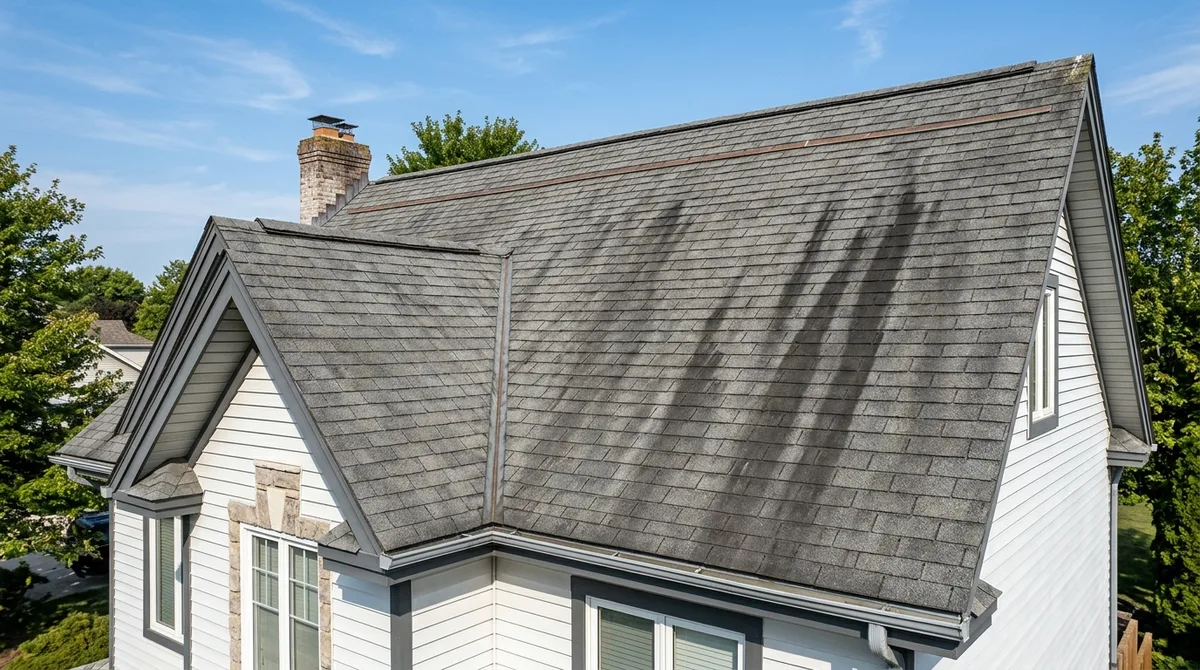
The Short Answer
Black streaks on an asphalt shingle roof are almost always caused by an airborne cyanobacterium called Gloeocapsa magma, not dirt. It feeds on the ground limestone filler inside modern asphalt shingles and shows up as dark vertical streaks, usually on the north or shaded side of the roof. The staining is cosmetic at first, but if it is left alone it holds moisture against the shingles and can shorten the roof's usable life. It is removed with a professional soft-wash treatment and can be prevented long-term with zinc or copper strips near the ridge, or with algae-resistant (AR) shingles the next time you replace.
What Causes the Streaks
Modern asphalt shingles use ground limestone as a filler in the shingle mat. That limestone is a nutrient source for Gloeocapsa magma, which is a photosynthetic bacterium (not a mold or algae in the strict biological sense, though it is universally referred to as roof algae). Spores are airborne and travel from roof to roof, which is why once a house in a neighborhood gets streaks, neighboring houses often follow within a few years.
Colonies grow fastest where the shingles stay damp longest, which is why streaks concentrate on:
- North-facing slopes and shaded areas
- Slopes underneath overhanging tree branches
- Areas below skylights or dormers where water drains slowly
- Roofs on coastal, humid, or heavily wooded lots
The streaks are technically staining rather than damage in the first year or two, but a well-established colony traps moisture against the shingles and speeds up granule loss and premature aging.
How to Safely Remove Black Streaks
The ARMA-Approved Soft-Wash Method
The Asphalt Roofing Manufacturers Association (ARMA) recommends soft-washing with a diluted sodium hypochlorite (bleach) solution applied at low pressure. A common professional working strength is around 3 to 6 percent sodium hypochlorite mixed with water and a surfactant that helps the solution cling to sloped shingles rather than immediately running off. The chemistry kills the algae at the root; a low-pressure rinse washes the dead colonies off the shingles.
The key point is that soft-washing is a chemistry job, not a pressure job. Standard pressure washers (1,300 to 3,000 psi) strip the ceramic granules off asphalt shingles and drive water up under them. This is why manufacturers like GAF and CertainTeed explicitly void warranties for pressure washing but do allow soft-wash cleaning that follows ARMA guidance.
DIY Bleach Solution
Some homeowners tackle small, accessible areas themselves using a 50/50 mix of standard household chlorine bleach and water applied with a low-pressure pump sprayer. Pre-soak surrounding landscaping with plain water so any runoff is diluted, avoid working in direct sun (evaporation reduces the chemistry's contact time), and rinse plants again afterward. Do not scrub aggressively; that removes granules too.
Oxygen bleach is a gentler, plant-safe alternative, but it works much more slowly than chlorine bleach and often needs multiple applications to remove established streaks.
Safety: DIY vs. Professional
Roof work is one of the leading causes of home-improvement injuries. Follow OSHA ladder safety guidance if you go up a ladder at all: place the base one foot out from the wall for every four feet of height, maintain three points of contact, and work with a spotter.
Call a licensed roof or exterior cleaning professional if any of these apply:
- Roof pitch steeper than 4:12 (a 4-inch rise per foot of horizontal run). Steep-slope work requires fall-arrest gear and training.
- Two-story or taller home. Standard residential ladders become genuinely dangerous at those heights.
- Existing shingle damage. Walking on curling or brittle shingles causes further granule loss. A professional can evaluate whether the roof is safe to clean or whether it is really replacement-grade.
- Manufacturer warranty concerns. A certified professional documents their method so your warranty stays intact.
Preventing the Streaks From Coming Back
Zinc and Copper Ridge Strips
The single most effective long-term prevention is a metal strip installed near the ridge of the roof. When it rains, water carries trace amounts of zinc or copper ions down over the shingles, and those ions are toxic to Gloeocapsa magma. Copper is more effective than zinc and lasts longer but costs more upfront. Either option typically prevents streaks from returning for five to ten years and can be installed as a discrete strip during the next reroof or as an aftermarket add-on.
Algae-Resistant (AR) Shingles
If you are already thinking about replacing the roof, algae-resistant shingles are worth the small premium. Products like GAF's StainGuard Plus and CertainTeed's StreakFighter technology embed copper-lined granules directly into the shingle at manufacture. Homeowners on the r/Roofing community generally report that AR shingles noticeably outperform standard shingles in humid regions over a decade or more of exposure. AR shingles typically cost 10 to 15 percent more than base models but save the cost of repeated cleanings over the roof's life.
Vegetation and Airflow
Simple maintenance dramatically lowers roof humidity. Trim overhanging branches to increase sunlight and airflow so the roof dries faster after rain. Make sure the attic has balanced soffit and ridge ventilation so the deck temperature stays close to outside air. Warm, humid deck conditions are exactly what algae wants.
Estimated Costs
Costs vary by region and roof size. Ranges below are general U.S. guidance, not quotes.
| Service | Estimated Cost (USD) | Lifespan / Result |
|---|---|---|
| Professional Soft-Wash | $300 to $1,200 | Kills growth; lasts 2 to 5 years |
| Zinc or Copper Ridge Strips | $150 to $300 (DIY) / $500 to $1,500 (professional install) | Prevents return; lasts 5 to 10 years |
| Shingle Rejuvenation | $1,500 to $6,000 | Extends useful life by around 5 years |
| Full Asphalt Replacement | $7,000 to $25,000+ | Permanent fix; lasts 20 to 30 years |
Regional pricing skews meaningfully. Northeast markets often push cleaning quotes toward the high end of these ranges; the Southeast and Midwest tend to fall in the middle to low end.
Frequently Asked Questions
Can black streaks cause health problems?
Gloeocapsa magma is not typically considered toxic to healthy people. But when colonies dry out, spores can become airborne and enter attic ventilation. Neglected roofs can also develop mold and mildew that pose more established respiratory risks. For sensitive individuals, prompt cleaning is a reasonable precaution.
How often should I clean my roof?
In most U.S. climates, a professional cleaning every three to five years is enough. Heavily shaded or coastal homes may need it every one to two years.
Will cleaning void my warranty?
Only if unapproved methods (like pressure washing or unapproved chemicals) are used. Soft-washing that follows ARMA guidance is often actually required by manufacturers to keep long-term warranties intact.
Are algae-resistant shingles really worth the extra cost?
In humid, wooded, or coastal regions, yes. The premium is usually $0.15 to $0.30 per square foot at installation, which pays for itself several times over across a 25-year roof life if you would otherwise be cleaning every few years.
Why does my neighbor have streaks and I don't (yet)?
Spores travel from roof to roof, so once one house in a block is affected, others typically follow within a few years. Your roof may currently have better sunlight, better ventilation, or slightly higher-quality shingles keeping it clean, but the exposure is the same.
Can I use oxygen bleach instead of chlorine bleach?
Yes. Oxygen bleach is gentler on plants and pets but works much more slowly and often requires multiple applications to fully remove established streaks.
What if I find moss and algae together?
Moss is a bigger problem than algae. It has rhizoids that grip into shingle seams, holds water constantly, and can lift shingle edges. If you see both, prioritize a professional soft-wash and have the underlying deck evaluated for early rot.