The Short Answer
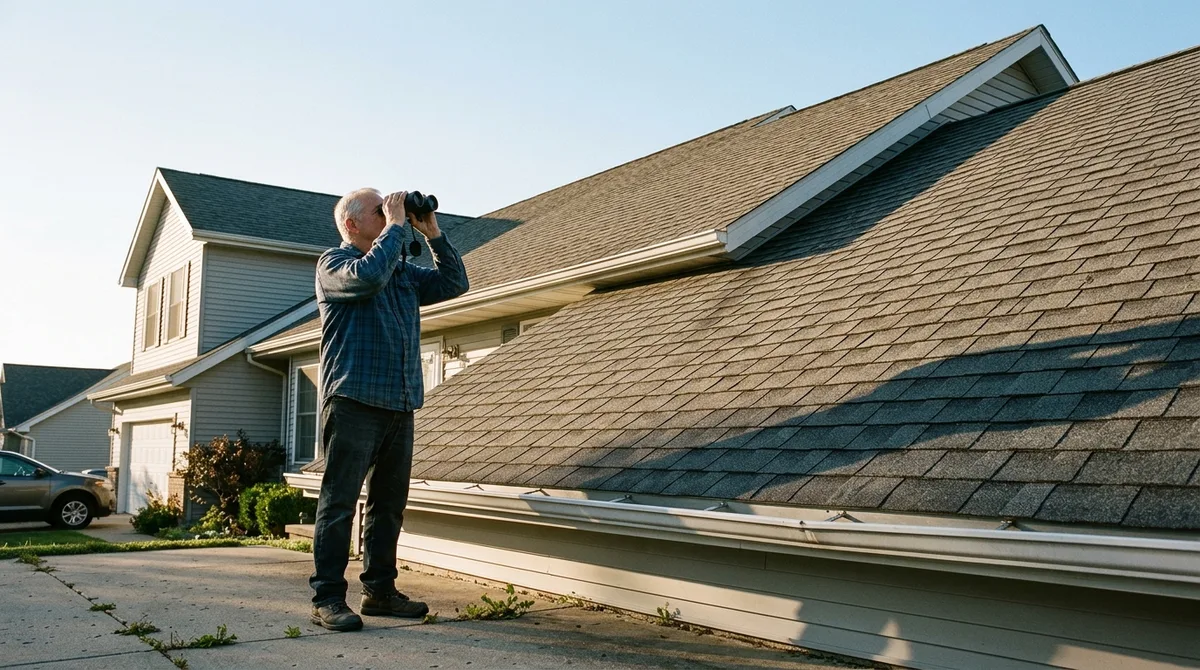
Homeowners can safely inspect a roof for hail damage from the ground by performing a systematic 360-degree perimeter walk using 10x42 magnification binoculars and a high-intensity 1,000-plus lumen flashlight to identify shingle bruising, granule loss, and dented metal components. By identifying collateral damage on accessible items such as gutters, vinyl siding, window screens, and air conditioning units, property owners can gauge the severity of a storm's impact without the risks associated with climbing ladders or walking on damaged surfaces. Ground-level visual evidence is often enough to trigger an insurance claim, but any sign of structural sagging or interior water penetration requires immediate evaluation by a licensed professional.
The Safety Case for Staying on the Ground
The primary reason to inspect from the ground is the mitigation of real physical risk. Falls from heights consistently rank as a leading cause of residential fatalities and serious injuries in the United States. Even a properly set extension ladder, maintained at a 75-degree angle, poses risks of base-out slides or structural failure if the user is untrained or the ladder is incorrectly rated for the load.
For safety-relevant, height-based tasks, there is a clear boundary between what a homeowner should check and what requires a professional. Limit your own involvement to visual observation from the ground or a stable platform like a balcony. Climbing onto a roof after a hailstorm is especially hazardous because displaced shingle granules behave like ball bearings, drastically reducing traction. If a roof shows visible sagging, downed power lines, or severe structural compromise, treat the site as an unsafe structure and stay clear until a licensed professional or utility crew clears the area. Professionals working at height use Personal Fall Arrest Systems, including harnesses and lifelines, which current OSHA fall protection guidance requires for many roof-access scenarios.
What You Need for a Ground-Level Inspection
A ground-level inspection depends heavily on the quality of the tools you use to extend your vision and capture usable evidence.
Binoculars
Binoculars are the primary tool for a ground inspector. A 10x42 or 8x42 configuration is generally recommended: the first number is magnification, and the second is the objective lens diameter in millimeters, which controls light-gathering ability. Roof-prism binoculars are usually preferred over Porro-prism models for their straight-barrel ergonomics and better weather sealing. To use them well, adjust the interpupillary distance until you see a single clear circle, then focus with the central wheel before fine-tuning the diopter (usually on the right eyepiece) for any difference between your eyes.
Lighting and the Raking-Light Technique
Lighting often matters more than magnification. A flashlight rated at 1,000-plus lumens with a high Color Rendering Index helps you tell a damp spot from a plain shadow. The raking-light technique is especially useful: inspecting during early morning or late evening, when sunlight hits the roof at a low angle, casts long shadows that reveal shallow dents and bruises. At midday, you can simulate this by holding a bright flashlight at a shallow angle to the surface you're checking.
Documentation
Use your phone's optical zoom or wide-angle shots rather than digital zoom, which pixelates shingle bruising until it looks like normal wear. Keep automatic timestamps and EXIF data turned on. Establishing a clear date of loss is one of the most important factors in a successful insurance claim.
A Systematic 360-Degree Perimeter Walk
A quick glance at the roofline isn't enough. Hail often strikes one side of a house harder than others depending on wind direction, so walk the full perimeter and check every slope.
Check for Collateral Damage First
Before you even look at the roof itself, check softer materials around the property. If these show damage, it's strong evidence of the storm's severity and often enough to convince an insurance adjuster to schedule a full roof inspection.
- Soft metals: Check aluminum gutters, downspouts, and gutter aprons for round dimples. Thin-gauge metal often shows pockmarks even from smaller hail.
- HVAC units: The cooling fins on outdoor AC condensers are fragile and often show a visibly crushed pattern after hail impact.
- Vinyl siding and trim: Look for crescent-shaped cracks, chips, or starburst fractures, especially on older, more brittle vinyl.
- Window screens: Punctures, tears, or frayed mesh are a strong indicator of hail momentum at the property.
- Painted surfaces: Check fences, mailboxes, and decks for splatter marks where hail knocked away dirt or paint.
The Chalk Test
A simple field test: rub ordinary sidewalk chalk sideways across a suspected impact point on a metal surface, like a downspout or low-hanging vent. The chalk deposits on the undisturbed flat surface but skips over indentations, making even shallow hits easy to see and photograph.
How Different Roofing Materials Show Hail Damage
Each roofing material reacts differently to impact, and knowing the signature for your material, consistent with National Roofing Contractors Association guidance, helps you spot real damage through binoculars rather than mistaking normal wear for storm damage.
Asphalt Shingles
Asphalt is the most common material and the most prone to bruising. A bruise happens when a hailstone crushes the fiberglass mat beneath the granule layer. From the ground, this looks like dark, circular spots where granules have been knocked loose, exposing the black asphalt underneath. Left unaddressed, UV exposure degrades these spots further and can lead to premature aging and leaks.
Metal Roofing
Metal roofs usually take cosmetic dents rather than punctures. Damage becomes functional when an impact is severe enough to compromise the factory-applied coating, which can lead to rust and corrosion over time. Look for a hammered texture along seams and ridges.
Wood Shingles and Shakes
Fresh hail damage on wood shows as sharp-edged splits that follow the wood grain, exposing bright, unweathered cedar underneath, distinct from the gray, weathered splits caused by ordinary aging.
Clay and Concrete Tile
Tile is rigid and brittle, so it shatters or cracks rather than dents. Look for star-shaped fractures radiating from an impact point, chipped corners, or ridge cap damage. Tile fragments on the ground or in gutters are a clear sign of a serious impact.
Hail Size and What It Typically Does to a Roof
The National Weather Service and the insurance industry generally reference hailstone diameter as a starting point for damage risk, though actual damage also depends on the stone's density and the wind speed driving it.
| Hail Size Reference | Diameter | Common Impact on Roofing |
|---|---|---|
| Pea | 1/4 inch | Rarely causes damage except on already-brittle materials |
| Marble | 1/2 inch | Can dislodge granules on older shingles; may dent soft aluminum gutters |
| Dime / Penny | 3/4 inch | Beginning of real damage risk: dents soft metals, bruises thin shingles |
| Quarter | 1 inch | Common claim threshold: causes bruising and mat fractures on standard asphalt shingles |
| Golf Ball | 1.75 inch | Severe damage likely: can fracture wood shakes, crack tile, and dent metal panels |
| Baseball | 2.75 inch | Catastrophic: can puncture the roof deck and shatter most roofing materials |
Hailstones don't always fall straight down. High winds can drive them in at an angle, and a 1-inch hailstone pushed by 60 mph winds can cause more damage than a larger stone falling in calm air. This is part of why damage often concentrates on just one or two slopes of a house rather than spreading evenly.
Functional Damage vs. Cosmetic Damage
Forensic research from Haag Engineering is widely used to draw this exact line: the most common point of dispute in a hail claim is whether damage is considered functional or purely cosmetic, and this distinction can be the difference between a full roof replacement and a denied claim.
- Functional damage: A reduction in the roof's water-shedding ability or its expected service life. If a hailstone fractures the shingle mat, the roof's life has been shortened even if it isn't leaking yet.
- Cosmetic damage: Marks, dents, or scratches that change the roof's appearance without affecting performance or lifespan. Many policies include cosmetic damage exclusions, particularly for metal roofs, so insurers may not pay for dents unless the metal is actually punctured.
Insurance adjusters commonly verify hail claims using a 10-foot by 10-foot test square marked out on multiple roof slopes, counting verifiable hits within that area. Thresholds vary by carrier, but a common benchmark for a full replacement is around 8 to 10 functional hits per square on at least three sides of the roof.
Filing an Insurance Claim
Filing a hail damage claim is a structured process with real deadlines, and missing them can cost you coverage entirely.
Timelines and Deadlines
Your date of loss starts the clock. Most policies require homeowners to report damage within a defined window, often somewhere between 6 months and 1 year, and some states set statutory caps on filing windows. Missing the deadline can mean an outright denial of coverage, so don't sit on ground-level evidence once you've documented it.
The C.L.U.E. Report
The Comprehensive Loss Underwriting Exchange (C.L.U.E.) tracks insurance claims on a property for roughly seven years, including claims that were ultimately denied. Multiple claims in a short window can lead to a non-renewed policy or a shift from Replacement Cost Value to Actual Cash Value coverage, so it's worth understanding before you file.
ACV vs. RCV Coverage
- Replacement Cost Value (RCV): The insurer pays the full cost to replace the roof with new materials of similar kind and quality, minus your deductible.
- Actual Cash Value (ACV): The insurer pays only the depreciated value based on the roof's age. On an older roof, this can leave homeowners covering a large share of replacement costs out of pocket.
Estimated Costs for Hail Damage Repair
Costs vary widely by region and storm severity, and prices in hail-prone states like Texas and Colorado often rise right after a major storm event. Treat the ranges below as general guidance, not quotes.
| Service | Estimated Cost Range (USD) |
|---|---|
| Professional Inspection | $150 - $450 |
| Specialty Inspection (tile, slate, steep-slope) | $300 - $700+ |
| Minor Spot Repairs | $300 - $1,500 |
| Mid-Scope Repair (multiple slopes/flashing) | $1,500 - $8,000 |
| Full Asphalt Roof Replacement | $8,000 - $25,000 |
| Premium Material Replacement (tile, slate, stone-coated steel) | $20,000 - $50,000+ |
In high-risk states, many insurers use a percentage-based wind/hail deductible instead of a flat dollar amount, commonly 1% to 5% of your home's insured value. On a home insured for $400,000, a 2% deductible means paying $8,000 out of pocket before coverage kicks in, so it's worth checking your policy's deductible structure before you're in the middle of a claim.
Frequently Asked Questions
Does filing a hail claim raise my insurance rates?
Not automatically. Many states restrict rate increases tied to a single weather claim. However, if a whole neighborhood is hit by the same storm, insurers sometimes raise base rates for that ZIP code the following year to reflect the higher regional risk.
Can I file a claim if the hail was small?
You can, but it's often unsuccessful. Hail under about 3/4 inch rarely causes functional damage on shingles in good condition. On an older, more brittle roof, smaller hail can still cause real damage, though adjusters sometimes classify this as wear and tear rather than storm damage.
What if I can't see the roof clearly because of debris or snow?
Standard inspection guidance doesn't require removing snow, ice, or heavy debris just to view the roof. It's safer to wait for the roof to clear naturally before doing a ground-level check, since walking on a snow-covered roof is genuinely dangerous.
Should I hire a traveling storm-chaser contractor?
Be cautious. Some contractors travel specifically to storm-hit areas and push for large upfront deposits or an Assignment of Benefits form that hands them control of your insurance claim. Homeowners on forums like Reddit's r/Roofing community frequently warn about this exact pattern. Always confirm a local license, proof of insurance, and a real physical business address before signing anything.
What evidence is most convincing to an adjuster?
Dented soft metals, like gutters and AC fins, tend to carry real weight because they can't be artificially aged or faked. Their condition helps confirm a hail event actually happened on a specific date, which makes an adjuster take the rest of your documentation more seriously.
How do I find the official storm report for my address?
The NOAA Storm Prediction Center publishes daily storm reports that list the time, location, and largest hailstone size reported by spotters in a given area, a useful way to cross-check your own observations against an official record.