The Short Answer
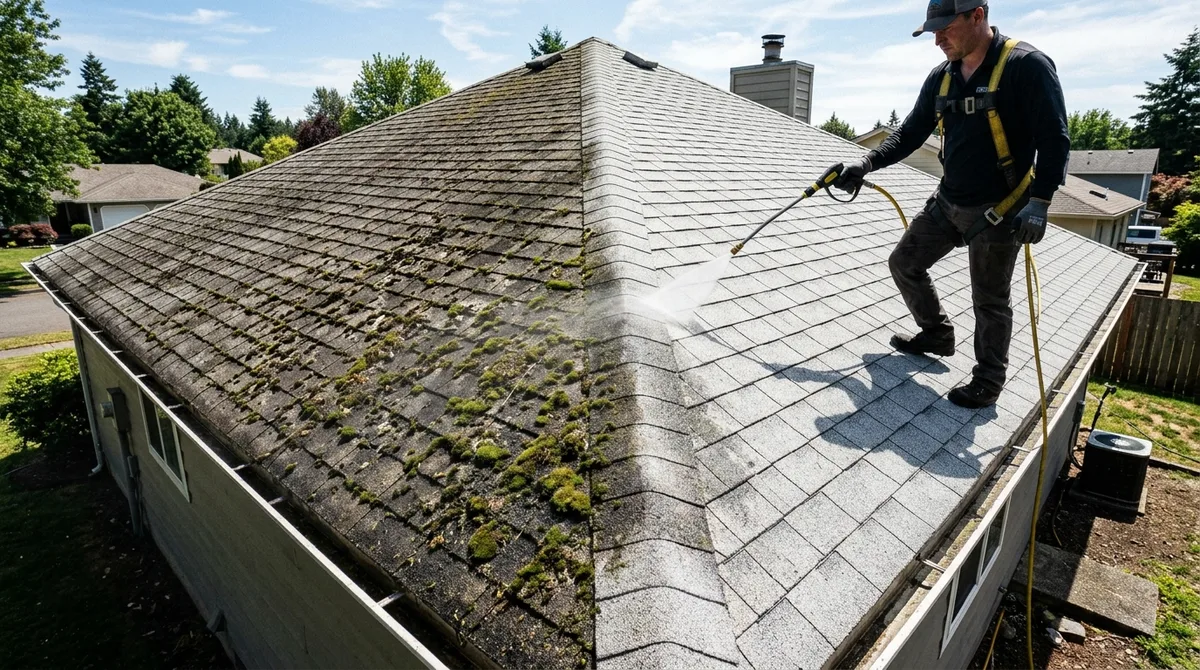
If your shingles are only stained by black algae streaks, green moss, or general dirt, and the shingles themselves are still flat, flexible, and holding granules, a professional soft-wash cleaning is usually the right call. A full replacement is only needed if shingles are curling, cracking, missing, losing granules in bulk (you find them in the gutters), or if the roof is past 20 years and starting to leak. There is a growing third option called shingle rejuvenation, which can add years of life to a middle-aged roof for a fraction of replacement cost.
Signs Your Roof Just Needs Cleaning
The classic dirty-but-healthy roof shows these symptoms:
- Black streaks running vertically down the shingles, usually on the north or shaded slopes. These are caused by Gloeocapsa magma, an airborne cyanobacterium that feeds on the limestone filler in asphalt shingles.
- Green moss in the seams between shingles or along the north edge of the roof.
- Surface dirt, tree sap, or leaf staining from overhanging branches.
- Shingles that are otherwise flat, flexible, and not curling, with most of their granule surface intact.
These roofs typically respond well to a professional soft-wash treatment and can look nearly new afterward.
Signs Your Roof Actually Needs Replacement
Cleaning cannot fix structural or material failure. If any of the following are true, replacement (or at minimum a professional inspection) is the right conversation:
- Curling or cupping shingles: The corners lift up or the center bows down. This means the asphalt has lost its binding oils and the shingle can no longer seal.
- Cracked or broken shingles across multiple slopes, not just one damaged spot.
- Bald spots where the ceramic granules have worn off, exposing the black asphalt mat.
- Granules in the gutters: Some granule loss is normal, but if you can scoop cups of them out of the gutters or downspout runouts, the shingles are near the end of their life.
- Age past 20 to 25 years for a standard three-tab shingle, or 25 to 30 for architectural shingles.
- Active leaks, water stains on ceilings, or attic light leaks at seams.
- Sagging deck between trusses, which points to underlying deck rot rather than shingle wear.
The Science of Cleaning: Soft-Wash vs. Pressure Washing
If cleaning is the right call, the method matters a great deal. Using the wrong technique can turn a healthy 10-year-old roof into a failing one overnight.
Why Pressure Washing Destroys Shingles
Standard pressure washers deliver 1,300 to 3,000 psi at the nozzle. That force strips off the ceramic granules that protect the asphalt from UV damage, and it can drive water up under shingles and into the underlayment. Major manufacturers including GAF and CertainTeed explicitly state that high-pressure washing voids the roof warranty.
The Soft-Wash Method
Professional cleaners use a chemical solution applied at very low pressure, similar to garden-hose pressure. The Asphalt Roofing Manufacturers Association (ARMA) recommends a specific mix of sodium hypochlorite (essentially laundry-strength bleach) diluted with water, which kills the algae and moss at the root without stripping granules. A surfactant is added so the solution clings to the shingles long enough to work rather than running straight off. Landscaping is pre-soaked and sometimes neutralized to protect plants.
The Third Path: Shingle Rejuvenation
For roofs that are 10 to 15 years old and starting to look tired but are still structurally sound, shingle rejuvenation products like Roof Maxx are worth considering. These are bio-based oils sprayed onto the shingles that partially replace the petrochemical oils shingles lose over time. Rehydrated shingles regain flexibility and are less likely to crack or shed granules in a storm.
A single application of a reputable rejuvenation product costs roughly $1,500 to $3,000 for an average home and typically extends useful life by around five years. This is not a fix for shingles that are already curling, missing, or leaking. It is a way to buy time on a middle-aged roof that would otherwise be pushed to premature replacement.
Insurance Surveillance: Why Cleaning Matters More Than Ever
Since 2024, many U.S. insurance carriers have been using high-resolution aerial imagery and drone surveillance to monitor policyholders' roofs. If an insurer's imagery shows heavy moss, algae, or debris, they can issue a non-renewal notice and classify the biological growth as neglect. In some states, notably Florida, statutes now allow insurers to drop coverage for roofs older than 15 years unless the owner can provide a certified inspection proving remaining useful life. Regularly cleaning a healthy roof is now genuinely part of keeping a policy in force in a lot of markets, which is a change that homeowners on the r/Roofing community discuss frequently as they navigate non-renewals.
Choosing Algae-Resistant Shingles If You Do Replace
If replacement is the right call, most major manufacturers now offer algae-resistant (AR) shingles with copper-infused granules. GAF's StainGuard Plus and CertainTeed's StreakFighter technology release copper ions over decades to prevent black streaks from taking hold in the first place. Premium AR shingles cost roughly 10 to 15 percent more than base models but can eliminate the need for regular professional cleanings over the roof's life.
Safety: DIY vs. Professional
Falls from residential ladders and roofs are consistently one of the leading causes of home-improvement injuries. OSHA ladder safety guidance is the reference for anyone considering ladder work: keep the base one foot out from the wall for every four feet of height, maintain three points of contact at all times, and work with a spotter.
Call a licensed professional if any of the following apply:
- Your roof pitch is steeper than 4:12 (a four-inch rise per foot of run), which requires fall-arrest gear.
- Your home is two stories or taller, where residential ladders become genuinely dangerous.
- You are handling concentrated bleach or commercial soft-wash chemicals, which require proper protective equipment and neutralization for landscaping.
- You suspect any structural issue, sagging, or wood rot in the deck.
Estimated U.S. Cost Ranges
Ranges vary by region. Northeast markets often run 20 to 30 percent above national averages; Southern states with year-round work seasons run below.
| Service | Estimated Cost (USD) | Longevity Gain |
|---|---|---|
| Professional Soft-Wash | $300 to $1,200 | Kills growth; lasts 2 to 5 years |
| Localized Roof Repair | $400 to $2,000 | Resolves immediate leaks |
| Shingle Rejuvenation | $1,500 to $6,000 | Adds 5 to 15 years of life |
| Full Asphalt Replacement | $7,000 to $25,000+ | Permanent fix; lasts 20 to 30 years |
Prevention and Ongoing Maintenance
- Trim overhanging branches so trees stay at least 10 feet away from the roof. More sunlight and airflow means faster drying and less algae.
- Install zinc or copper strips near the ridge for about $150 to $300. Rainwater carries trace metal ions down the slope, permanently inhibiting moss and black streaks.
- Clean gutters twice a year, spring and fall. Clogged gutters back water up under the starter shingle course and rot the fascia.
Frequently Asked Questions
How do I know if it is just algae or actual shingle failure?
Algae washes off. If a soft-wash treatment restores the roof to a uniform color and the shingles are still flat and flexible, it was cleaning-grade dirt. If shingles are curling, cracking, or shedding granules, cleaning cannot fix it and you are looking at replacement.
Will cleaning my roof void my warranty?
It depends entirely on the method. High-pressure washing voids most major manufacturer warranties. An ARMA-compliant soft-wash performed by a professional is often actually required to keep long-term warranties valid.
How often should I clean my roof?
In most U.S. climates, a professional cleaning every three to five years is enough. Homes in heavily shaded, humid, or coastal areas may need attention every one to two years.
Is shingle rejuvenation actually worth the money?
For a roof that is 10 to 15 years old, still structurally sound, but starting to feel brittle, rejuvenation can delay a $15,000-plus replacement for another five to ten years at a fraction of the cost. It is not appropriate for roofs already leaking or losing shingles.
What if I find moss and algae together?
Moss is more damaging than algae because it holds water against the shingles and its rhizoids can physically lift shingle edges. If both are present, prioritize a professional soft-wash and have the deck evaluated for early rot.
Can I use oxygen bleach instead of chlorine bleach?
Oxygen bleach is safer for plants and pets and works, but slowly. It usually requires multiple applications and some light scrubbing to remove established stains, and it is not what ARMA-compliant professional soft-wash uses.