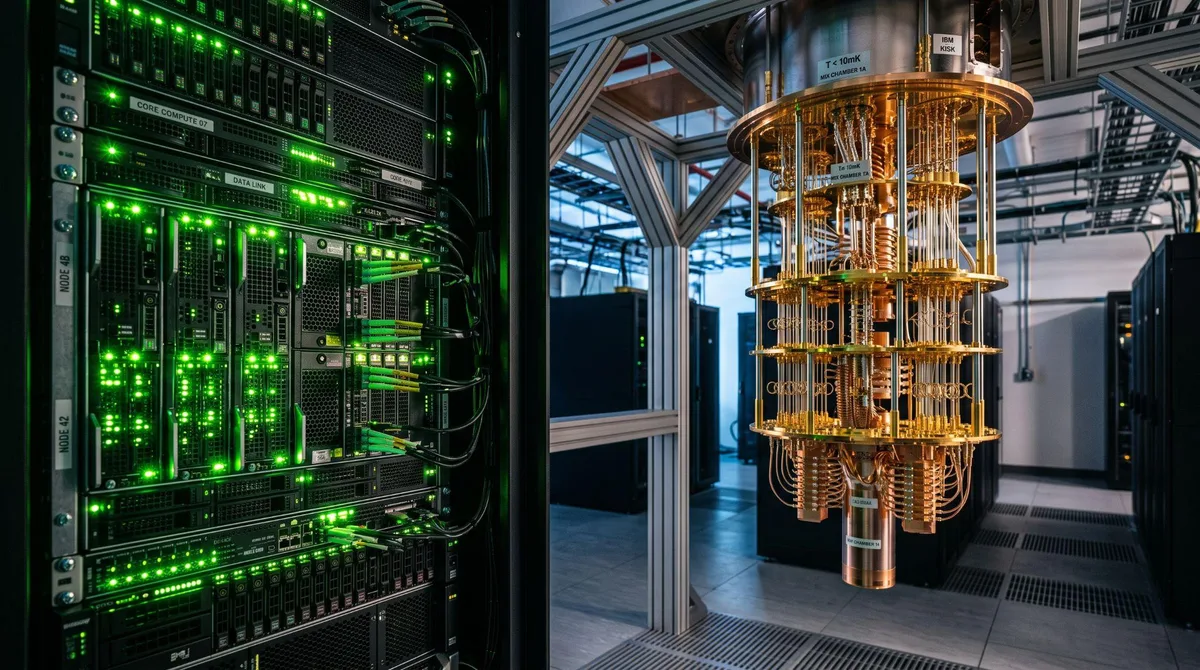
The headlines make quantum computing sound like a successor to classical computing, waiting to render your laptop obsolete. It won't. Quantum computers are astonishingly powerful at a narrow band of problems and worse than a smartphone at almost everything else. Understanding why requires understanding what qubits actually do — and why the same properties that make quantum machines fast also make them useless for opening a spreadsheet.
Classical Bits vs. Qubits: Different Machines, Different Jobs
A classical bit is a switch: 0 or 1. A qubit can exist in a superposition of 0 and 1 simultaneously — and multiple qubits can become entangled, so measuring one instantly determines the state of others. Combined, these let a quantum machine explore a huge space of possible answers in parallel, then use quantum interference to amplify correct answers and cancel wrong ones.
The catch: you can't just "read" a superposition. Measurement collapses it to a single value. So quantum algorithms have to be designed so that when they're finally measured, the answer is what pops out. That's an enormous constraint — and it's why quantum computers can't just run existing software faster.
The Problems Quantum Machines Actually Beat Classical At
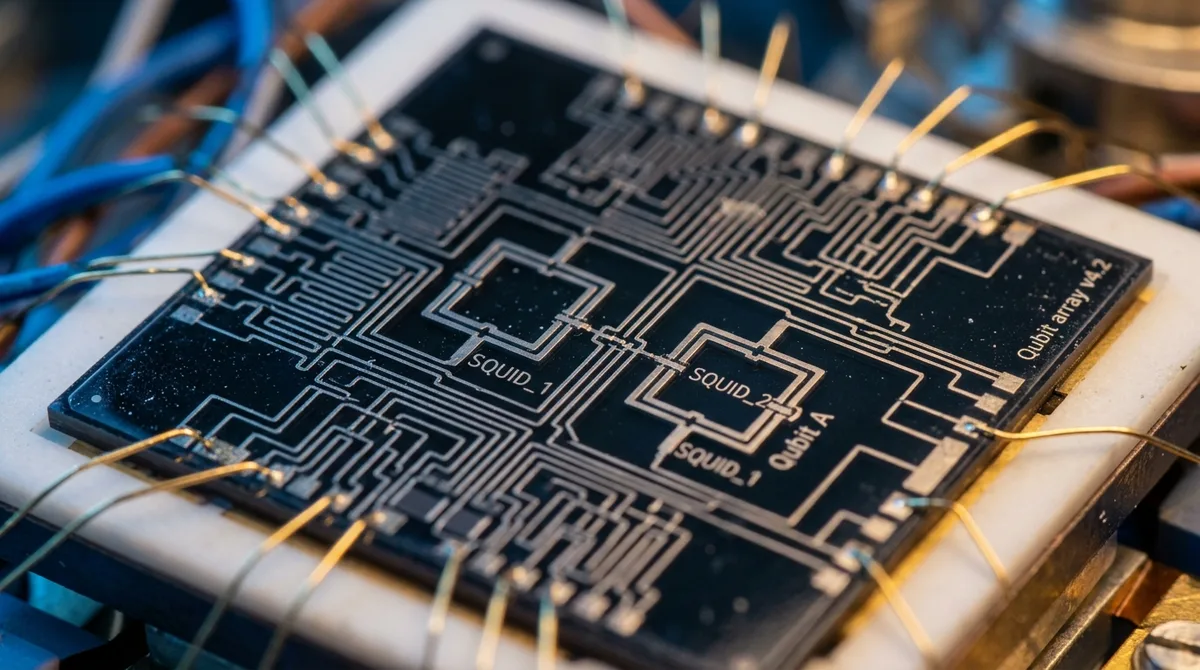
Quantum advantage exists in three main areas:
- Factoring large numbers (Shor's algorithm): the core threat to current RSA and elliptic-curve encryption. Classical factoring scales terribly; Shor's scales polynomially.
- Simulating quantum systems: molecular chemistry, materials science, drug design. Classical machines struggle to simulate quantum behavior; quantum machines simulate it natively.
- Certain optimization and search problems (Grover's algorithm): a quadratic speedup — faster, but not the same exponential gain as Shor's.
Notice what's not on that list: word processing, video streaming, web browsing, database queries, graphics rendering, machine learning inference. Classical computers already do those at extremely low cost, and quantum machines offer no advantage — often massive disadvantage.
The Error Correction Tax
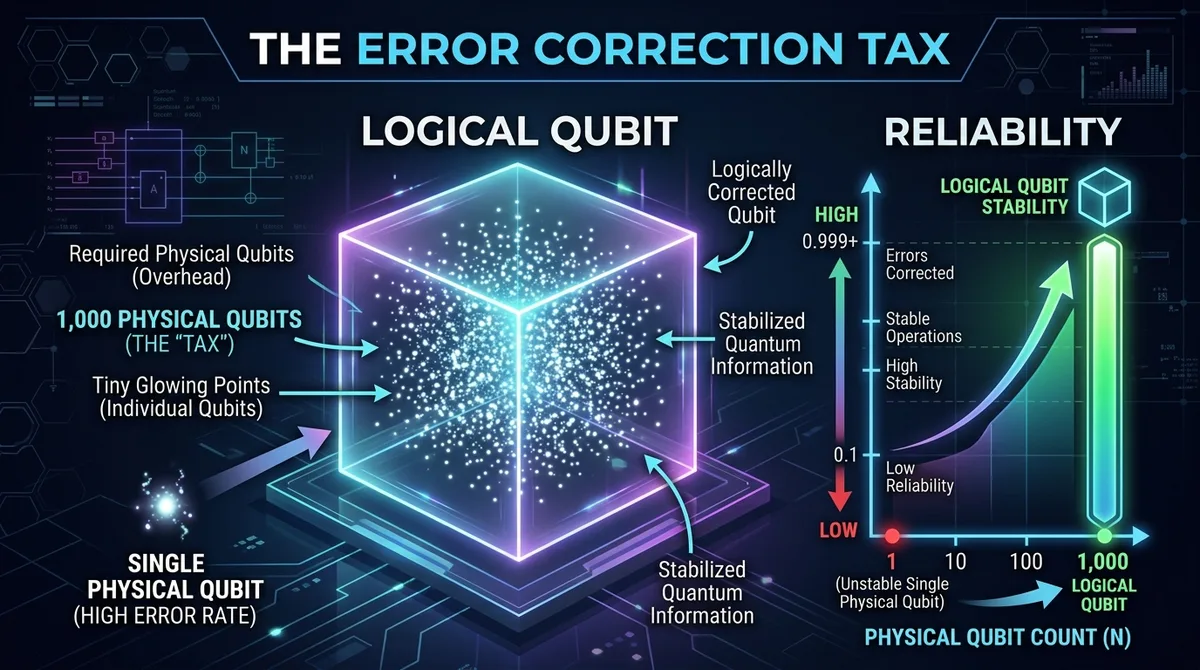
Qubits are ferociously fragile. A stray photon, a millikelvin temperature spike, a nearby vibration — any of these can collapse superposition and destroy computation. Real quantum machines survive by running dilution refrigerators near absolute zero (colder than deep space) and by using error correction: bundling many "physical" qubits together to form a single reliable "logical" qubit.
The current overhead is brutal. Building one reliable logical qubit takes on the order of 1,000 physical qubits. A quantum machine capable of factoring a real 2048-bit RSA key would need millions of physical qubits — and IBM's largest current system has just over a thousand. This is why quantum computing timelines keep slipping: the engineering to scale is genuinely hard.
The Practical Constraints
| Classical laptop | Current quantum computer | |
|---|---|---|
| Cost | $500–$2,000 | $10–$100 million |
| Power draw | 50–100W | ~25kW (for the cryogenic system) |
| Operating temperature | Room temp | Near absolute zero (~10 mK) |
| Programming | Any modern language | Specialized quantum SDKs (Qiskit, Cirq) |
| Runs Excel | Yes | Meaningless — no OS, no display |
What Discussions in the Field Actually Emphasize
Researchers on quantum computing forums tend to push back hard on consumer coverage. Two recurring points:
- "Quantum supremacy" isn't "usefulness." A quantum machine solving a synthetic benchmark faster than a classical supercomputer proves a physics milestone. It doesn't mean the machine can do anything commercially useful yet.
- The near-term winners are hybrids. The realistic architecture for the next decade is a classical computer doing most of the work with a quantum coprocessor called only for specific bottleneck subroutines — like using a GPU for graphics.
Why They Coexist Instead of Compete
Quantum and classical computing aren't a replacement story — they're a specialization story, closer to how edge and cloud computing divide labor. Classical machines will keep doing what they're already great at. Quantum machines will earn their expensive keep in cryptography, chemistry, materials science, and specific optimization problems where the exponential advantage is real. Your laptop is safe.
Frequently Asked Questions
Will quantum computers break Bitcoin?
Not soon. Bitcoin's cryptography would be vulnerable to a sufficiently large quantum computer running Shor's algorithm — but that machine likely needs millions of physical qubits, and the industry is racing to standardize post-quantum cryptography before it exists.
Can I run one at home?
Not usefully. Small quantum simulators can run on a classical laptop, and cloud services from IBM, Google, and AWS let you queue real quantum jobs remotely. Physically owning one is a research-lab endeavor.
How far off is a practical quantum computer?
Depends on the definition. For narrow chemistry and materials work, small useful machines already exist. For cryptographically-relevant scale (breaking RSA), most researchers estimate 10–20 years, and estimates have shifted many times.