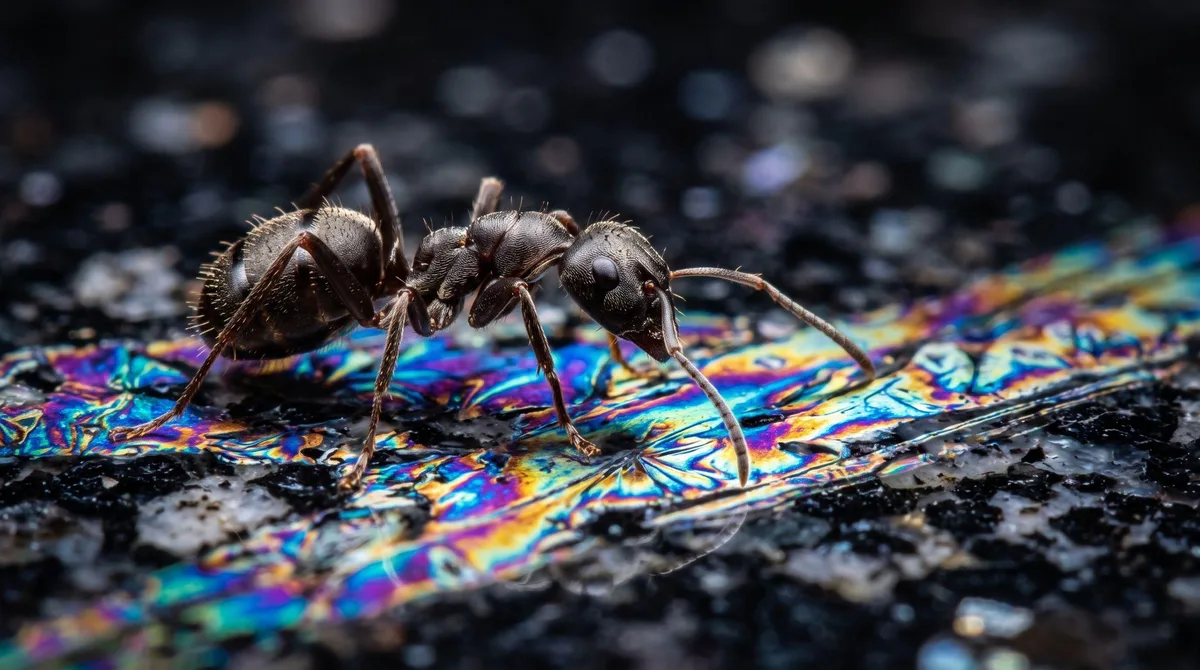
The frustration is universal: you clean the kitchen obsessively and ants still march across the counter within days. The insulting truth is that ants don't invade because your kitchen is dirty — they invade for reasons largely independent of your housekeeping. Understanding those reasons is the difference between a spray-every-week routine and actually stopping the trail at the source.
The Real Trigger: Weather, Not Crumbs
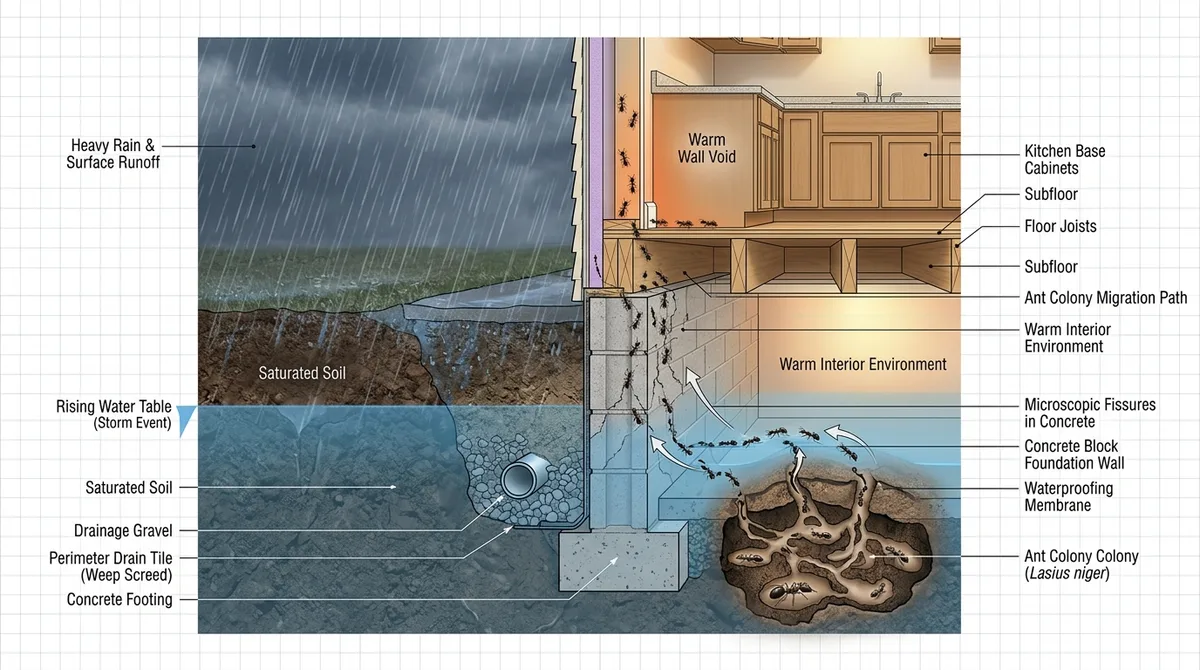
The biggest single predictor of indoor ant sightings is weather change. Heavy rain floods underground colonies and drives them upward toward warm dry structures — which is why you notice ants after a storm. Extreme heat and drought push them inside looking for moisture. Cold snaps in fall send them seeking winter shelter. If ants suddenly appear despite a spotless kitchen, check the last week's weather before you check your habits.
How Ants Actually Find Food
A single scout ant explores randomly. When it finds something usable — a fingerprint of grease on a cabinet, a single crumb behind the toaster, condensation on a pipe — it returns to the colony laying a pheromone trail. Other ants follow that chemical scent and reinforce it. Within hours, what looked like "one ant" is a highway.
What this means: the crumb doesn't have to be visible to you. It just has to smell like food to a scout with an antenna 500× more sensitive than a human nose. Grease films on stove hoods, sugar residue on the underside of a spice rack, pet food bowls, and even wet sponges all qualify.
How They Get In: The Structure Is the Problem
Ants enter through gaps a homeowner can't even see:
- Foundation cracks — microscopic fissures in concrete where the wall meets the slab
- Gaps around pipes and utility penetrations — HVAC lines, electrical conduit, plumbing entries
- Weep holes in brick veneer — designed to let moisture escape, but ants use them freely
- Window and door weatherstripping — worn gaskets create highway-sized entrances at ant scale
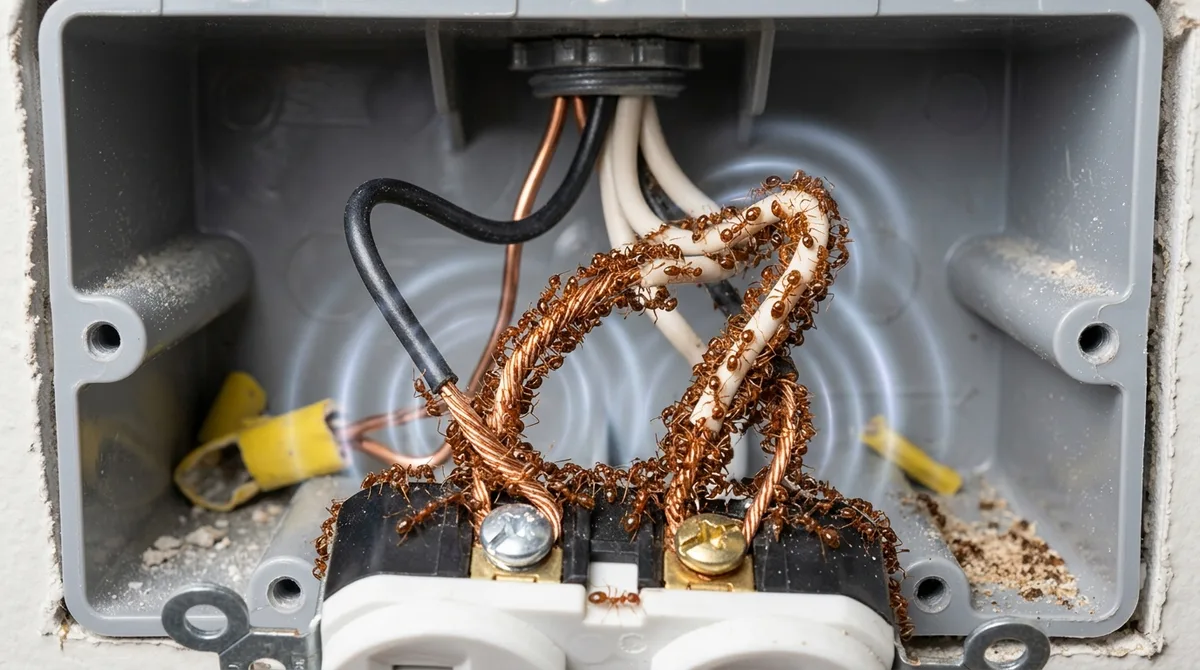
Homeowner discussions confirm what pest control pros know: ants nest in electrical boxes and outlets more often than most people realize. The dry, warm cavity is ideal, and once established, they can cause corrosion and even fire hazards — a variant of the buzzing you might otherwise blame on a failing switch.
Why Spraying Individual Ants Backfires
Killing ants you see feels satisfying but is counterproductive. The visible ants are 5–10% of the colony. Kill them and the colony compensates by sending more scouts. Worse, some sprays trigger "budding" in species like Pharaoh ants — the colony splits and starts multiple new nests inside your walls.
The pest-control consensus: use bait, not spray. Slow-acting bait (borax or fipronil-based) gets carried back to the colony and kills the queen. It requires patience — you'll see more ants for a few days as they feed — but it ends the source instead of the symptom.
What Actually Works
- Find the entry point. Follow the trail backwards to where it disappears — under a baseboard, into an outlet, out a window frame. That's your seal target.
- Seal the gap with silicone caulk or expanding foam. Blocking the highway matters more than killing the traffic.
- Place bait, not spray. Put ant bait stations directly on the trail. Do not disturb the trail while bait is working.
- Clean up scent, not just crumbs. Wipe surfaces with vinegar or a mild detergent solution to erase pheromone trails. Water alone doesn't remove them.
- Address moisture. Fix dripping pipes, dehumidify basements, empty pet water bowls at night. Moisture attracts ants more reliably than food.
When to Call a Professional
Persistent recurring infestations, ants inside walls or electrical systems, or carpenter ant activity (they excavate structural wood) warrant professional pest control. A licensed exterminator can identify the species, locate the actual nest, and apply targeted treatments homeowners can't safely use themselves.
Frequently Asked Questions
Why do ants come in when it rains?
Heavy rain floods underground colonies and drives ants upward toward warm dry structures. This is the single most common trigger for sudden indoor infestations regardless of how clean the kitchen is.
Why do vinegar or lemon repel ants?
Both erase the pheromone trails ants use to communicate. They don't kill the colony — they just disrupt navigation temporarily, which is why the ants return once the smell fades.
Are ants in outlets dangerous?
Potentially yes. Large colonies in electrical boxes can cause corrosion on contacts and, over time, arcing and fire risk. If you see ants entering an outlet, turn off the breaker before investigating and call an exterminator.