The Direct Answer: What Is That Loud Banging Noise?
The most common cause of a loud banging noise in pipes when the water turns off is a phenomenon known as water hammer (also called hydraulic shock). This happens when a fast-closing valve suddenly stops the flow of moving water, sending a pressure shockwave backward through your plumbing system.
When this shockwave travels through your pipes, it can cause them to vibrate and strike nearby wall studs, floor joists, or adjacent pipes. While water hammer is the usual culprit, other underlying issues like excessively high water pressure, loose pipe hangers, or waterlogged air chambers can also trigger or worsen these noisy water pipes.
Understanding Water Hammer: The Physics of Plumbing Pressure Shocks
To understand why your pipes bang, it helps to look at how water moves through your home. Water is heavy and dense. When you open a faucet, water flows through your pipes at a fairly high speed. When you shut the valve off, that moving column of water has nowhere to go.
If a valve closes slowly, the water decelerates gradually without much disturbance. However, many modern plumbing fixtures and appliances use fast-closing valves that shut off almost instantly. This rapid shutoff forces the moving water to slam into the closed valve, and that kinetic energy converts into a pressure shockwave that travels back through the pipe network very quickly. The result is the physical banging sound you hear inside your walls. Under high household pressure, that momentary spike can be much stronger than the system's normal operating pressure.
Fast-Closing Valves: The Primary Triggers
Certain appliances are known for causing plumbing pressure shocks because they rely on automated, rapid-shutoff solenoid valves. These include:
- Washing Machines: Modern washing machines cycle water on and off quickly during the fill and rinse stages.
- Dishwashers: Electronic solenoid valves in dishwashers snap shut quickly to control water levels.
- Refrigerator Ice Makers: These use small, fast-acting valves that can trigger localized banging behind the fridge.
- Single-Handle Faucets: Flicking a single-handle kitchen or bathroom faucet closed quickly can also trigger a shockwave.
Other Common Causes of Noisy Water Pipes
While water hammer is the physical mechanism behind the noise, several system-wide plumbing issues can make your pipes more vulnerable to these shocks.
1. High Municipal Water Pressure
Most residential plumbing systems are designed to operate safely in roughly the 40 to 60 pounds per square inch (PSI) range, and many codes cap static pressure at 80 PSI. If your home's water pressure exceeds 80 PSI, the water moves with more energy, which can make any sudden valve closure more forceful. Persistently high pressure not only contributes to banging pipes but can also wear out appliance valves, water heaters, and pipe joints over time.
2. Loose Pipe Hangers and Straps
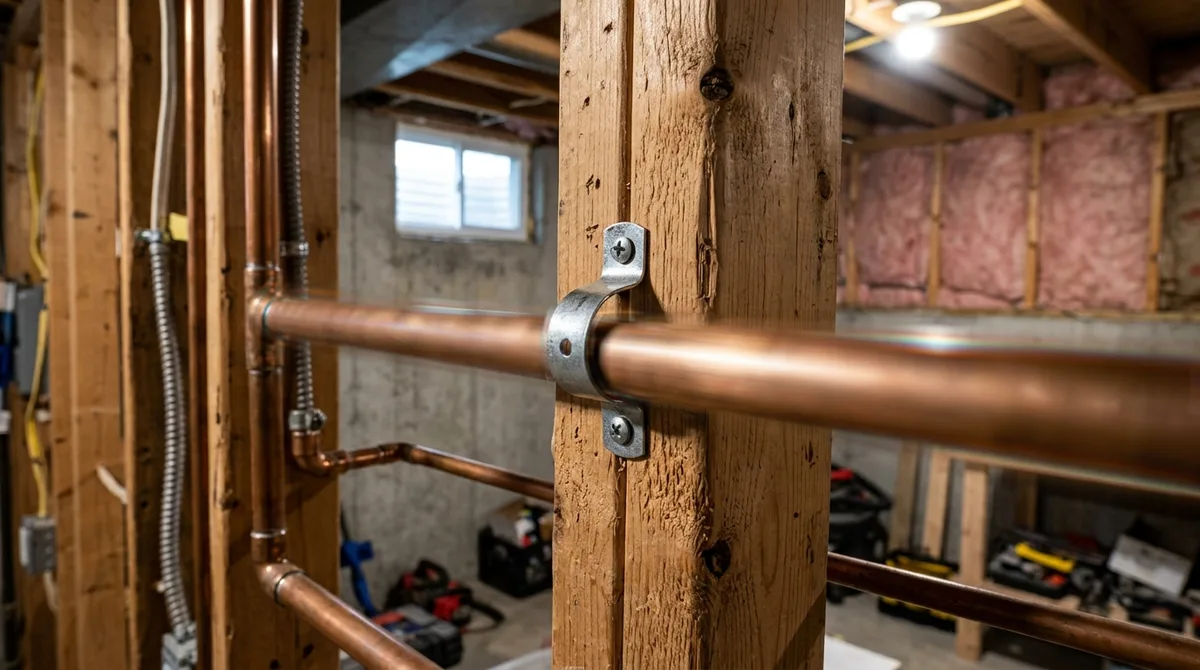
Pipes expand, contract, and vibrate slightly under normal operation. Plumbers use plastic or metal hangers, straps, and brackets to secure pipes to the home's framing. Over time, these fasteners can loosen, corrode, or break. Even a minor pressure shock can then cause an unsecured pipe to move and strike nearby drywall, wood studs, or adjacent pipes, amplifying the banging sound.
3. Waterlogged Air Chambers
In many older homes, plumbers installed 'air chambers'—vertical, capped sections of pipe located behind walls near fixtures. These chambers trap a cushion of air that acts as a shock absorber when water shuts off. Over time, the trapped air can be absorbed into the water, leaving the chamber filled with water and no longer effective. Without that air cushion, the plumbing system loses a source of natural shock absorption.
How to Diagnose the Source of the Noise
To find the right water hammer fix, you first need to isolate the root cause. These steps can help you diagnose your system:
- Test Your Water Pressure: Buy an inexpensive pressure gauge from a hardware store. Screw it onto an outdoor hose bib or your washing machine's cold water faucet, then turn the faucet on fully. If the reading is above 80 PSI, your pressure reducing valve (PRV) may be failing or need adjustment.
- Identify the Trigger Fixture: Have someone turn various faucets and appliances on and off while you listen near the walls. Note whether the sound occurs throughout the house or only when a specific appliance (like the washing machine) shuts off.
- Inspect Visible Pipes: Check exposed pipes in your basement, crawlspace, or utility room. Gently wiggle them to see if they are loose or missing mounting brackets.
Step-by-Step Solutions to Fix Banging Pipes
Depending on your diagnosis, you can often resolve the banging noise using one of these common plumbing fixes.
Solution 1: Installing a Water Hammer Arrestor
Installing a water hammer arrestor is a reliable, modern solution for fast-closing valves. These small, sealed cylinders typically contain a sliding piston and a pre-charged air or gas chamber. When a pressure shockwave hits the arrestor, the piston compresses the cushion, absorbing the energy before it can shake your pipes. Look for models certified to the ASSE 1010 standard.
How to install them:
- For Washing Machines: You can buy screw-on water hammer arrestors that attach directly to the hot and cold water valves behind your washer. No cutting or soldering is required.
- For Faucets and Toilets: Under-sink models can often be installed inline on the water supply lines using compression fittings.
Solution 2: Recharging Waterlogged Air Chambers
If your older home has built-in air chambers that have become waterlogged, you can often recharge them by draining the plumbing system:
- Shut off the main water supply valve to your home.
- Open the highest faucet in your house (usually on the top floor) to let air into the system.
- Open the lowest faucet in your house (often in the basement or an outdoor hose bib) to drain the water out of the pipes.
- Once the water stops dripping, close all faucets and turn the main water supply back on slowly. As the pipes refill, air should be trapped in the vertical air chambers again, restoring the protective air cushions.
Solution 3: Adjusting or Replacing the Pressure Reducing Valve (PRV)
If your water pressure test showed a reading above 80 PSI, locate your main water shutoff valve. Nearby, you may find a bell-shaped brass valve called the Pressure Reducing Valve (PRV). Most PRVs are adjusted with a top screw or bolt, but the direction that lowers pressure varies by manufacturer, so check the label or manual and make small adjustments while re-testing with your gauge. If adjusting the valve does not lower the pressure, the internal diaphragm may have failed, and the PRV should be replaced by a licensed plumber.
Solution 4: Securing Loose Pipes
If the banging is caused by unsecured pipes vibrating against framing, you can secure them using pipe straps or hangers. When fastening copper pipes, use straps rated for copper or cushioned/isolated hangers, since direct contact between dissimilar metals can promote galvanic corrosion. If the pipes are behind finished walls, you may need to add insulation or foam padding through small access points to cushion the pipes against the drywall.
Cost Comparison: DIY vs. Professional Plumbing Repairs
The cost to resolve noisy water pipes varies based on the severity of the issue and whether you do the work yourself or hire a licensed professional. The ranges below are rough estimates based on recent U.S. averages and should be treated as general guidance only:
| Fix / Solution | DIY Cost Range | Professional Cost Range |
|---|---|---|
| Washing Machine Arrestors (Pair) | $25 - $50 | $150 - $300 |
| Inline Arrestor (Soldered/Crimped) | $15 - $40 (plus tools) | $200 - $450 |
| Recharging Air Chambers | $0 (Free) | $100 - $200 (Service Call) |
| Pressure Reducing Valve (PRV) Replacement | $50 - $120 (parts only) | $350 - $750 |
| Securing Loose Pipes (Hangers/Straps) | $5 - $20 | $150 - $350 (depends on wall access) |
Note: Prices vary significantly based on local labor rates, ease of access to the pipes, and whether emergency service is required. Always confirm current pricing locally and obtain multiple written estimates from licensed plumbers for major repairs.
When to Call a Professional Plumber
While installing screw-on arrestors or draining your pipes are fairly straightforward DIY tasks, some situations call for specialized tools and expertise. You should call a licensed plumber if:
- The banging noise persists after installing arrestors and lowering your water pressure.
- The noisy pipes are located behind finished drywall, tile, or plaster walls with no easy access.
- Your home lacks a Pressure Reducing Valve (PRV) entirely, or the existing PRV is soldered or otherwise fixed in place.
- You suspect a hidden water leak behind your walls (indicated by mold growth, musty odors, or unexplained increases in your water bill).
- Your plumbing system uses older galvanized steel or polybutylene pipes, which are widely considered more prone to failure and are often recommended for replacement.
Frequently Asked Questions
Can water hammer damage my plumbing system?
It can. Repeated pressure shockwaves from water hammer may weaken pipe joints, loosen hangers, and stress appliance valves over time, and in severe cases can contribute to leaks or pipe failures. Addressing the issue early helps prevent more costly water damage down the line.
Why did my pipes suddenly start banging after years of silence?
This often happens because your home's air chambers have become waterlogged (filled with water instead of air), your pressure reducing valve (PRV) has started to fail, or pipe hangers inside your walls have loosened or broken over time.
Where should water hammer arrestors be installed?
Water hammer arrestors should generally be installed as close to the fast-closing valve as possible. Common locations include directly on the washing machine supply valves, under kitchen and bathroom sinks, and on the water line feeding your refrigerator's ice maker.
What is the difference between water hammer and thermal expansion?
Water hammer typically causes a single, loud bang or rapid rattling immediately after a water valve closes. Thermal expansion tends to cause slower ticking or clicking sounds as hot water pipes expand and rub against framing while heating up or cooling down.
Does high water pressure cause water hammer?
High water pressure (above about 80 PSI) increases the energy of water flowing through your pipes, so when a valve closes suddenly, the resulting shockwave can be stronger. High pressure does not create water hammer on its own, but it can significantly amplify the noise and stress.