The Short Answer
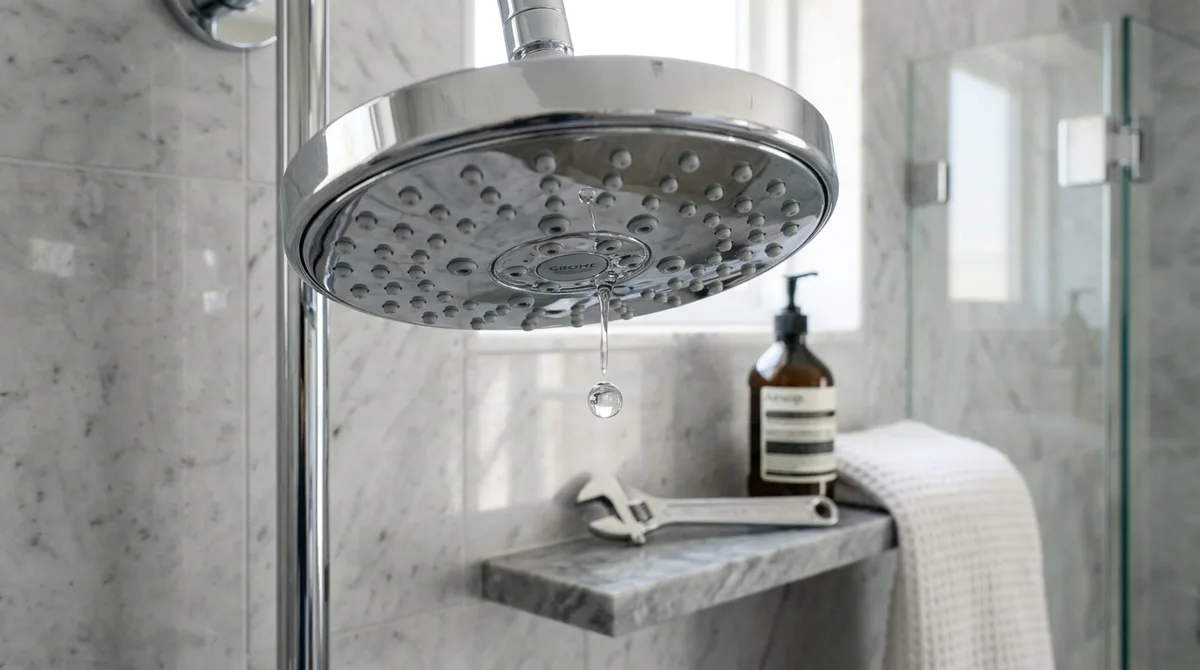
A shower head that drips constantly is almost always caused by a worn rubber washer, a failing valve cartridge inside the wall, or mineral buildup blocking the shower head's flow paths. Most cases can be fixed by descaling the head, replacing the internal washer, or swapping the valve cartridge, and the parts cost between one and one hundred dollars. If the leak is behind the wall or you see stains on drywall or ceilings below the shower, stop and call a licensed plumber. That kind of leak causes structural damage fast.
Common Causes of a Constant Drip
Worn Rubber Washer or O-Ring
Every shower head has a small rubber washer inside the connection where it screws onto the shower arm. Over time, mineral deposits and constant water pressure cause the washer to harden, crack, or shift out of place. A slow drip from the shower head after the water is off is very often just this washer. Replacement washers cost a couple of dollars at any hardware store and take under five minutes to swap.
Failing Valve Cartridge (The Most Common Real Cause)
Behind the wall, your shower handle controls a cartridge that mixes hot and cold water. When this cartridge wears out, it no longer seats tightly when the handle is closed, so a small amount of water keeps leaking past it and dripping out of the shower head. A cartridge replacement is the fix, and this is the true source of most persistent, slow-but-steady drips.
Cartridges are brand-specific. Homeowners on the r/Plumbing community frequently share tips on identifying Moen, Delta, and Kohler cartridges by the brand name usually etched on the escutcheon plate around the handle.
Mineral Buildup Blocking Nozzles
In hard-water areas, calcium and lime deposits clog the small nozzles on the shower head face. Water still finds a path, but the flow becomes uneven and sometimes drips from just a few nozzles even after shutoff. Soaking the head in plain white vinegar for a few hours dissolves the buildup and restores normal flow.
Cracked Housing or Failed Thread Seal
If the shower head housing itself is cracked, or if the previous installer skipped thread seal tape on the connection, you can see water seeping out from the joint at the shower arm rather than from the nozzles. Fresh PTFE thread seal tape, wrapped clockwise around the threads, usually fixes this in a few minutes.
Step-by-Step: Fix a Dripping Shower Head Yourself
- Turn off the water: Shut off the water at the fixture stop valves if present, or at the main house supply.
- Remove the shower head: Grip the shower arm with one hand (or wrap it in a towel to protect the finish) and unscrew the shower head counterclockwise. If it is stuck, use an adjustable wrench with tape over the jaws to avoid scratching the finish.
- Inspect the washer and threads: Look inside the swivel nut for the small rubber washer. If it is cracked, flat, or torn, replace it.
- Descale the head: Submerge the whole shower head face in white vinegar for at least an hour, longer for heavy buildup. A soft toothbrush cleans the nozzles.
- Reseal the threads: Wrap the shower arm threads with two to three layers of PTFE thread seal tape, then thread the shower head back on hand-tight plus a small final turn with a wrench.
- Turn the water back on and test: Watch for drips at the joint and from the nozzles for a few minutes after shutoff. Some run-on dripping for a minute or two after the shower is off is normal because water is draining out of the head itself.
If the drip continues after a full descale and washer replacement, the cause is almost certainly the valve cartridge behind the wall. That is a separate, more involved job.
Replacing the Valve Cartridge
Cartridge replacement is a common DIY job for handy homeowners, but it does require shutting off water to the house and pulling the shower handle apart. The general steps are:
- Shut off the main water supply and open the shower to relieve pressure.
- Remove the handle screw (usually hidden under a decorative cap), then pull the handle straight off.
- Remove the escutcheon plate to expose the retaining clip or nut holding the cartridge in place.
- Pull the old cartridge straight out. Bring it to a plumbing supply store or hardware store to match the exact replacement. Guessing the model rarely works.
- Lubricate the new cartridge O-rings with plumber's grease, slide it in aligned the same way, and reinstall the retaining clip, escutcheon, and handle.
Many major manufacturers, including Moen and Delta, offer limited lifetime warranties on cartridges, and the Delta Faucet service program will send a free replacement cartridge to the original homeowner in many cases. Worth checking before spending money on a new part.
DIY vs. Calling a Plumber
Safe DIY jobs: Replacing a shower head, swapping the internal washer, descaling with vinegar, replacing a tub spout, and swapping a same-brand cartridge on a modern valve.
Call a licensed plumber if:
- The leak is clearly behind the wall (water stains on the wall opposite the shower, damp drywall, mold smell, or water dripping through the ceiling below).
- Your home has old galvanized steel supply pipes that show visible rust or corrosion.
- The handle is stuck and will not move even after removing the retaining hardware.
- The valve body itself is cracked or leaking at the solder joints.
Behind-the-wall leaks quickly cause dry rot and mold in the wall cavity, which is far more expensive to fix than the plumbing itself.
Estimated U.S. Costs
Ranges vary by region and are general guidance, not quotes.
| Repair Type | DIY (Parts Only) | Professional (Labor + Parts) |
|---|---|---|
| Washer / O-Ring Replacement | $1 to $8 | $100 to $250 |
| Standard Valve Cartridge | $35 to $95 | $200 to $575 |
| Shower Head Replacement (economy) | $15 to $50 | $125 to $250 |
| Luxury or Rain Shower Head | $150 to $700 | $300 to $900 |
| Tub Spout and Diverter Fix | $20 to $65 | $150 to $400 |
Most plumbers charge a minimum service call or trip fee of about $75 to $150 just to arrive, before any labor. Local labor rates vary widely: expect the low end in mid-cost markets like Tulsa or Cape Coral, and the high end on the coasts and in the mountain West.
Repair vs. Replace: Which Makes More Sense?
Repair usually makes sense if the fixture is under 10 to 15 years old and the finish is still in good shape. Replacement is the better call if the housing is cracked, if the finish is severely corroded, if a specialized cartridge costs more than half the price of a whole new fixture, or if you want to upgrade to a WaterSense-certified low-flow model. The EPA estimates a family of four can save around 2,700 gallons a year with a certified WaterSense shower head, which also cuts the water-heating cost of every shower.
Prevention and Maintenance
- Descale annually: Soak the shower head in white vinegar once a year to keep mineral buildup from hardening.
- Monitor your water pressure: An inexpensive pressure gauge on an outdoor hose bib tells you if house pressure is above the recommended 60 psi. Persistently high pressure destroys cartridges and washers early.
- Replace washers proactively: Rubber washers cost pennies. Swapping them every three to five years is cheap insurance against a slow leak turning into a flood while you are away.
- Consider a water softener: In hard-water areas, a softener extends the life of every valve cartridge and fixture in the house, not just the shower.
Frequently Asked Questions
Why does my shower head drip for 20 to 30 minutes after I turn it off?
That is usually harmless run-on drainage. Water is held inside the head by surface tension after shutoff, and as air enters the nozzles or the water cools, it drains out. As long as the dripping stops within an hour, this is normal.
Can chemical drain cleaner fix a leaky shower?
No. Drain cleaner is designed for clogs in the drain line, not leaks in the pressurized supply line. It cannot reach the valve cartridge or shower head, and it can damage pipes.
How do I figure out which replacement cartridge I need?
The most reliable way is to remove the old cartridge and take it to a plumbing supply or hardware store to match physically. Most stores keep sample cartridges of major brands (Moen, Delta, Kohler) for comparison. The brand name is also usually etched on the escutcheon plate around the handle.
Will a leaky shower head cause mold?
An external drip into the tub or shower pan is mostly wasted water, not a mold risk. But if the drip is caused by a faulty valve that is also leaking into the wall cavity, mold and wood rot can develop quickly. Any water stain on the wall behind the shower is a red flag.
Does homeowners insurance cover a leaky shower?
Standard policies typically cover sudden, accidental water damage (a burst pipe, for example) but usually exclude damage from slow leaks or lack of maintenance. Fixing a drip early keeps you clear of the maintenance-exclusion gray area if a bigger claim comes up later.
Why is my new shower head leaking right after installation?
The most common causes are a misaligned or missing rubber washer inside the swivel nut, or thread seal tape that was skipped or applied incorrectly. Unscrew the head, check the washer position, add two to three fresh wraps of PTFE tape to the shower arm threads (clockwise as you face the end), and reinstall.