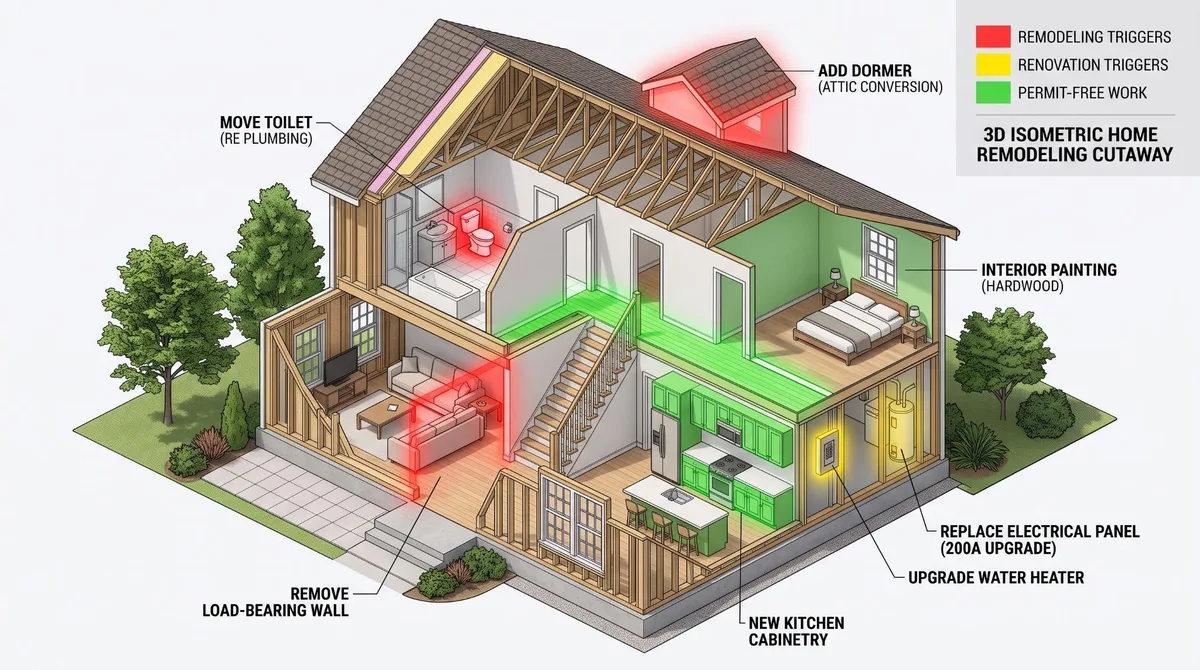
"Remodel" and "renovation" get used interchangeably in casual conversation and marketing copy, but contractors, permit offices, and tax codes treat them as genuinely different projects with different costs, timelines, and rules. Getting the distinction wrong can inflate a project's price by 30% or land you with an unpermitted structure that resurfaces when you sell. Here's what actually separates them.
The One-Sentence Definition Each
- Renovation: restoring or updating what's already there. New paint, new cabinets in the same footprint, refinished floors, replaced windows in existing openings. The structure and use don't change.
- Remodel: changing the structure, layout, or use of a space. Removing a wall, adding a bathroom, converting an attic to a bedroom, expanding a kitchen into a former dining room. Something fundamental about the space changes.
Restoration is a third term that sometimes enters the conversation — that specifically means returning a historic feature to its original condition, often to code from a specific period.
Why the Permit Office Cares
Permits are where the line becomes concrete. Most renovations — swapping cabinets, painting, replacing fixtures with equivalents in the same location — require no permit at all. As soon as work touches structure, plumbing rough-ins, electrical service changes, or building envelope, you're in remodel territory and need permits, inspections, and code-compliant work:
- Permit-free (usually renovation): paint, wallpaper, hardware swaps, replacing fixtures in the same location, refinishing floors, replacing cabinets without moving plumbing.
- Permit-required (remodel): moving a toilet, sink, or gas line; removing or adding walls; upgrading the electrical panel; adding square footage; converting a garage or attic to living space; replacing windows with different-size openings.
Unpermitted structural work is one of the top reasons real estate deals fall through at inspection — buyers' agents specifically look for evidence of undocumented additions.
Cost, Timeline, and Complexity
| Renovation | Remodel | |
|---|---|---|
| Typical timeline | 2–4 weeks | 3–6+ months |
| Permit required | Rarely | Almost always |
| Cost per square foot | $15–$60 | $100–$300+ |
| Design phase | Days to a week | 1–2 months |
| Financing options | Cash, personal loan | HELOC, renovation mortgage, construction loan |
The gap comes from the phases a remodel adds: architectural design, structural engineering, plumbing/electrical rough-in, inspections, and drywall — each with its own labor line.
The Tax Angle Most People Miss
The IRS distinguishes between "repairs" (deductible if it's a rental) and "improvements" (added to your cost basis, reducing capital gains when you sell). Broadly: renovations tend to fall into repair territory unless they raise the property's value; remodels are almost always capital improvements. If you're planning a sale in the next few years, keep every receipt for remodel work — it directly reduces your taxable gain.
When Homeowners Should Choose Which
Discussions on homeowner communities converge on a useful decision rule: if the space's function works and only its appearance or condition frustrates you, renovate. If the function itself frustrates you — a bathroom is in the wrong place, the kitchen is too small, an unused formal dining room could be a home office — remodel. Renovating a badly-laid-out space just spends money making bad geometry look better.
The Hidden Middle: "Reno-Model" Projects
Reality rarely respects clean categories. A "kitchen renovation" that turns into removing a non-load-bearing wall between kitchen and dining room is now a remodel — needs permits, changes the electrical, may hit HVAC ducting. Contractors call these "scope creep" projects, and they're where most residential budgets blow up. Set aside 15–20% contingency and be honest with yourself upfront about whether you can resist expanding the scope once demolition starts.
Frequently Asked Questions
Do I need an architect for a remodel?
For structural changes or additions, yes. For remodels within the existing footprint that don't touch load-bearing walls, a good design-build contractor can often handle the plans for permit submission. Historic districts and complex sites always benefit from an architect.
Which increases home value more?
Well-executed renovations of kitchens and bathrooms typically deliver 60–80% ROI. Additions and expansions (remodels) return more slowly but add more to appraised value. Neither reliably returns 100% except in very hot markets.
Can I remodel without a permit?
Legally, almost never — permits exist for safety and code compliance. Practically, unpermitted work is common but creates real trouble at resale or insurance-claim time.