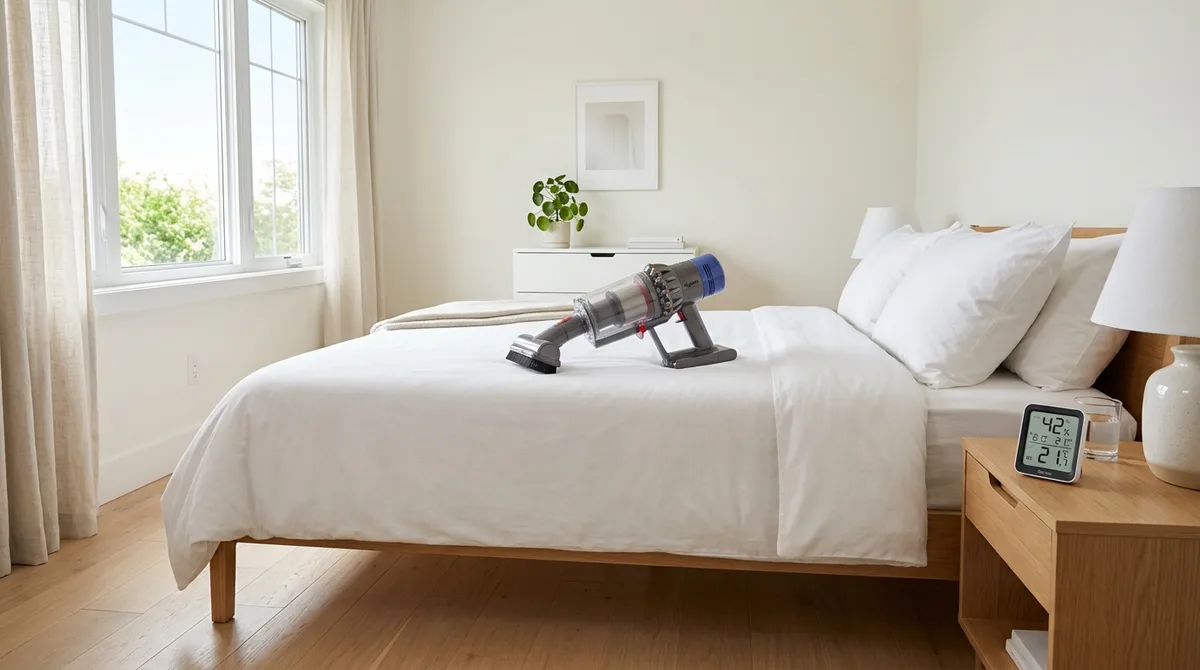
Dust mites are microscopic, they feed on shed skin, and they thrive in warm, humid rooms — which is why bedrooms are ground zero. You will never scrub them away with a cloth. The reliable approach is to make your home a place they cannot survive in. Three moves do most of the work.
The Three Things That Actually Matter
1. Wash Bedding Hot
Wash sheets, pillowcases, and covers weekly at 130°F (54°C) or hotter. Temperature is what kills mites; a warm wash just relocates them. For items you cannot wash hot, a 15-minute stint in a hot dryer does the same job.
2. Drop the Humidity Below 50%
This is the single most effective long-term control. When relative humidity falls under 50%, mites dry out and die because they absorb moisture from the air to survive.
- Measure it. A cheap digital hygrometer in the bedroom tells you where you stand — aim for 30–50%.
- Use a dehumidifier in damp rooms and basements; air conditioning helps but is often not enough in humid climates.
- Ventilate. Cold, dry winter air naturally thins mite populations if the home is aired out.
3. Encase the Mattress and Pillows
Allergen-proof encasements zip fully around the mattress and pillows and put a physical barrier between you and the millions of mites living deep in the padding. This is the highest-impact single purchase, and the covers themselves just need washing a few times a year.
Room-by-Room Targets
After the big three, focus your effort where mites concentrate: carpets, upholstered furniture, curtains, and soft toys. Vacuum with a HEPA-filter vacuum twice a week (a standard vacuum recirculates the fine allergen back into the air), and hot-wash or freeze children's plush toys.
Method Comparison
| Method | What It Does | Rough Cost | How Often |
|---|---|---|---|
| Allergen mattress encasement | Barrier (very high impact) | $20–$150 | Wash 2–4×/year |
| HEPA vacuum | Removes surface allergen | $150–$600+ | Twice weekly |
| Dehumidifier | Humidity control (kills mites) | $150–$350 | Run in humid months |
| Professional carpet cleaning | Deep extraction | $120–$250 (3 rooms) | 1–2×/year |
When It Becomes a Whole-Home Job
If allergies are severe and humidity stays high despite a portable dehumidifier, an integrated dehumidification or air-purification system tied into your HVAC ductwork can control the whole house at once. That is not a DIY install — it has to be sized and fitted by a licensed HVAC professional so it does not restrict airflow or freeze the cooling coils. Whole-home systems typically run from several hundred to a few thousand dollars depending on the filtration.
The Realistic Expectation
You will not get to zero — no home is mite-free. The goal is to push the population low enough that symptoms fade. Do the three core steps consistently for a few weeks and most people notice a clear difference in morning congestion and allergy flare-ups.
The Three Highest-Impact Steps, Ranked
- Drop humidity below 50%. This is the single most effective control — mites cannot survive when they can't absorb ambient moisture. Use a hygrometer to confirm, and a dehumidifier in damp rooms.
- Wash bedding hot (130°F/54°C+) weekly. Temperature kills mites; a warm wash just relocates them.
- Encase the mattress and pillows. Allergen-proof zippered covers put a physical barrier between you and the mites deep in the padding.
Room-by-Room Targets
After the big three, focus on carpets, upholstered furniture, curtains, and soft toys. Vacuum with a HEPA-filter vacuum twice a week (a standard vacuum recirculates the fine allergen), and hot-wash or freeze children's plush toys. This is the same battle that eventually necessitates replacing an aging mattress, which accumulates a heavy mite load over years.
Frequently Asked Questions
How do I get rid of dust mites?
The three highest-impact steps are keeping indoor humidity below 50%, washing bedding weekly in hot water (130°F+), and encasing the mattress and pillows in allergen-proof covers. Add twice-weekly HEPA vacuuming for carpets and upholstery.
Can you completely eliminate dust mites?
No home is fully mite-free. The realistic goal is to push the population low enough that allergy symptoms fade, which most people notice within a few weeks of consistent control.
Does lowering humidity really kill dust mites?
Yes. Below about 50% relative humidity, mites dry out and die because they absorb moisture from the air to survive — making humidity control the most effective single measure.