You mowed the lawn on Saturday and by Tuesday whole stripes are yellow. It's not disease or bad soil most of the time — it's the mower itself. Three specific mistakes cause the majority of post-mowing yellowing, each with a specific fix. Here's how to diagnose which one is hitting your lawn.
Cause 1: Dull Mower Blades
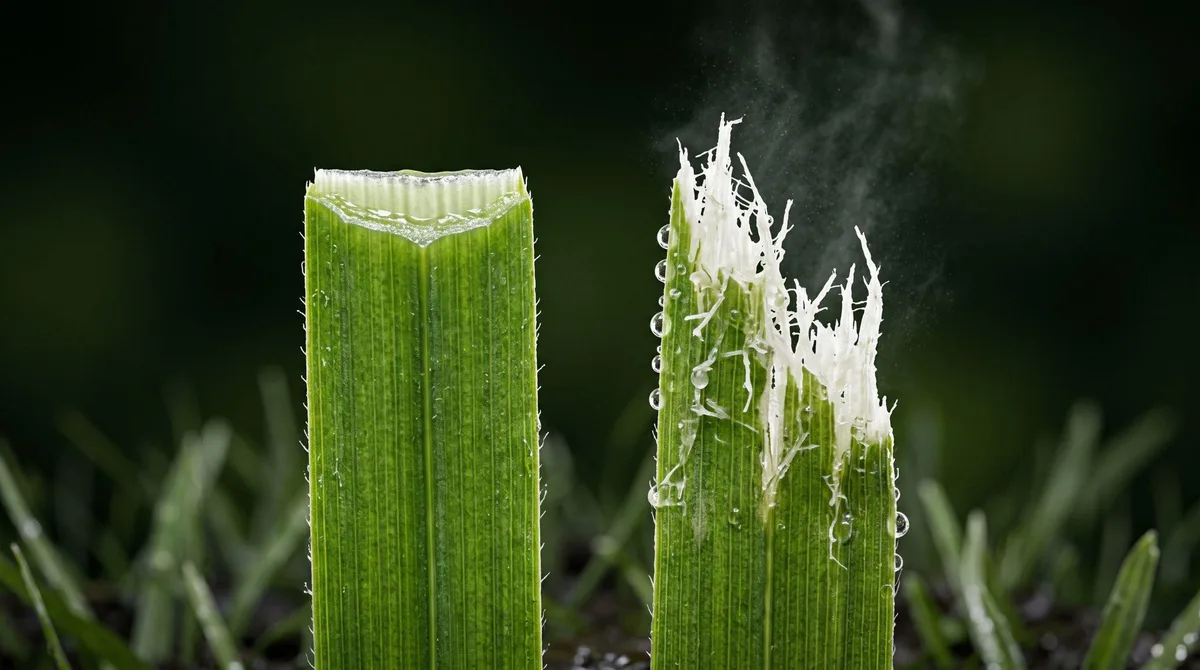
The single most common cause. Sharp blades slice grass cleanly. Dull blades tear it — leaving a shredded, ragged tip that loses moisture from the wound, browns as it dies back, and gives lawn diseases like Ascochyta leaf blight a foothold. Look closely at the tips of your grass after mowing: clean 45° cuts mean sharp; white shredded fringes mean dull.
Blades should be sharpened at least once a season, more if you hit stones frequently. A visibly nicked or bent blade needs replacement, not just sharpening.
Cause 2: Scalping (Cutting Too Short)
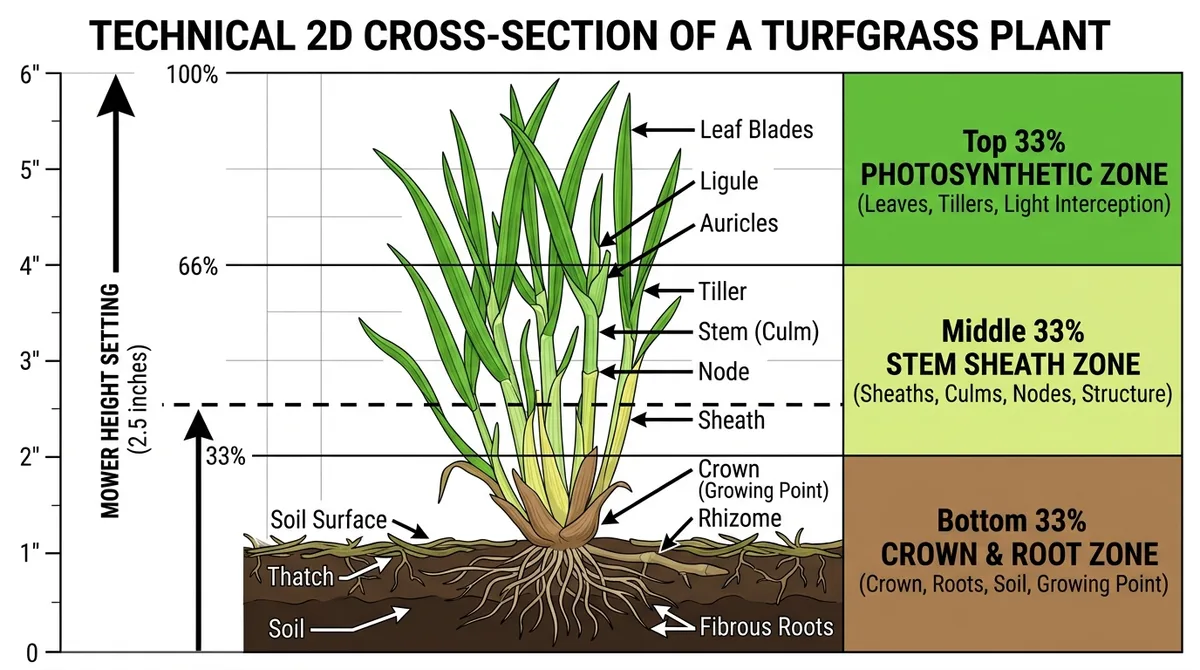
The one-third rule is the single most important lawn-care principle: never remove more than one-third of the grass blade in a single mowing. Cutting shorter than that "scalps" the plant, exposing the crown and disrupting photosynthesis. The plant responds by yellowing while it tries to regrow.
Most cool-season grasses (fescue, bluegrass, ryegrass) do best at 2.5–4 inches; warm-season grasses (Bermuda, zoysia) can go shorter, 1–2.5 inches. If your grass is 4 inches tall, don't cut below 2.7 — even if it looks "shaggy." Mow more often at a taller setting rather than less often at a shorter one.
Cause 3: Fertilizer Burn
If you fertilized shortly before mowing — especially with high-nitrogen synthetic fertilizer applied to dry grass or in heat — mowing can pulverize concentrated fertilizer granules into the blades, chemically burning them. The pattern is often irregular blotches rather than mower-track stripes.
Rules to avoid it: water fertilizer in thoroughly before the next mow, don't fertilize during peak heat, and use slow-release formulations if you're not sure.
Diagnosing by Yellowing Pattern
| Pattern | Likely cause |
|---|---|
| Uniform white/brown haze on tips | Dull blades — tearing rather than cutting |
| Sharp parallel yellow lines matching mower path | Wheel tracking, soil compaction, or Ascochyta |
| Irregular scattered patches | Fertilizer burn or drought stress |
| Circular yellow rings | Fungal disease (dollar spot, brown patch) |
| Yellow immediately after mowing, greens back up in 2-3 days | Mild scalping, will recover |
The Other Factors That Compound It
- Mowing wet grass: the mower can't cut cleanly through wet blades; you get more tearing, plus wheel tracks compact soggy soil.
- Mowing in the heat of the day: the plant is already stressed; adding cutting stress makes recovery slow.
- Same direction every time: creates permanent wheel tracks and soil compaction lines. Alternate mowing patterns each week.
- Bagging every clipping: mulching returns nitrogen and moisture to the soil. Constant bagging depletes the lawn over years.
What Recovery Actually Looks Like
Mild yellowing from a bad mow recovers in 5–10 days with consistent watering and no more cutting. Severe scalping or fertilizer burn can take a full growing cycle to fill back in. If a patch shows no recovery signs after two weeks — check for compacted soil, buried debris, or disease.
Discussions Among Turf Enthusiasts
Lawn-care regulars on turfgrass forums consistently emphasize two overlooked points:
- Cool-season grass hates summer mowing pressure. Reduce mowing frequency in July and August; the plants are already conserving energy, and aggressive cutting during dormancy triggers yellowing that persists into fall.
- Mower deck height is not the same across brands. Setting "3" on one mower may cut significantly shorter than "3" on another. Measure actual cut height with a ruler after mowing.
Frequently Asked Questions
How often should I sharpen my mower blade?
At least once per season — more often if you hit stones or debris. Sharpening takes 10 minutes with a file and dramatically improves cut quality.
Is it better to mow tall grass in stages?
Yes. If the lawn is very tall, mow at your mower's highest setting first, wait 2–3 days for recovery, then mow at target height. Cutting from 6 inches to 3 in one pass violates the one-third rule and will yellow.
Does bagging clippings prevent yellowing?
No — mulching is generally better for the lawn. Clippings return nitrogen and moisture; if they're not clumping visibly, mulching outperforms bagging.