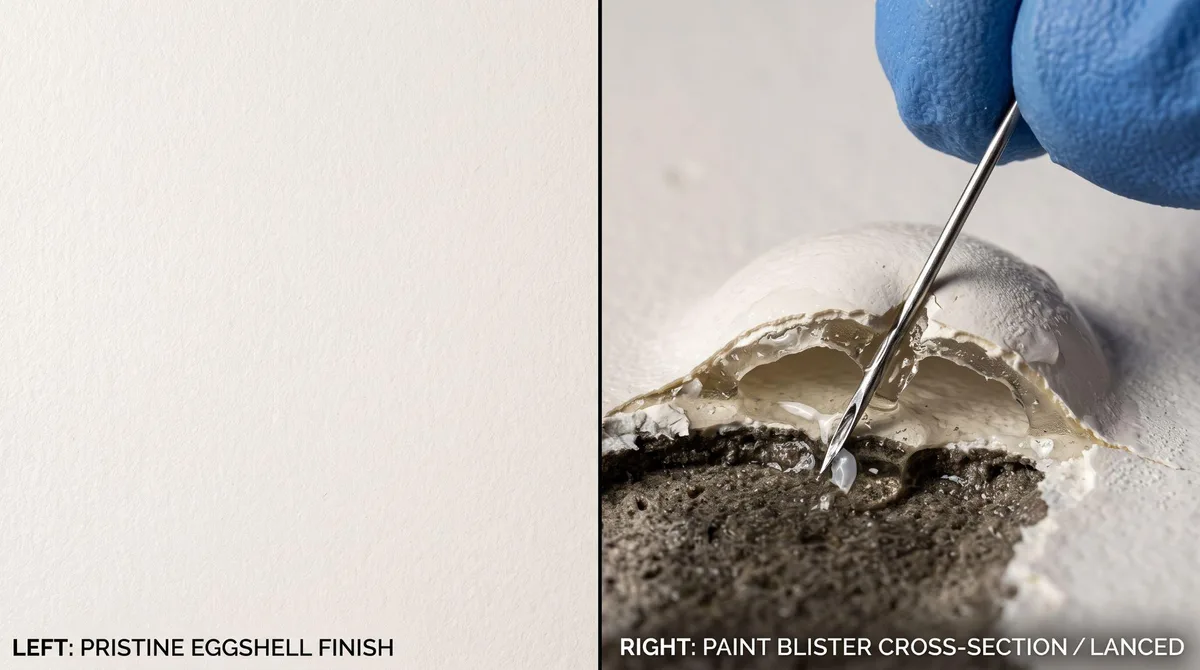
Painting is one of the few home upgrades where the cause of failure is legible in the failure itself. Paint that peels in strips is telling you something different from paint that blisters, cracks, or chalks. Understanding the visual signature of each failure mode is the difference between endless repaints and a coat that actually lasts.
The Number One Cause: Moisture Behind the Paint
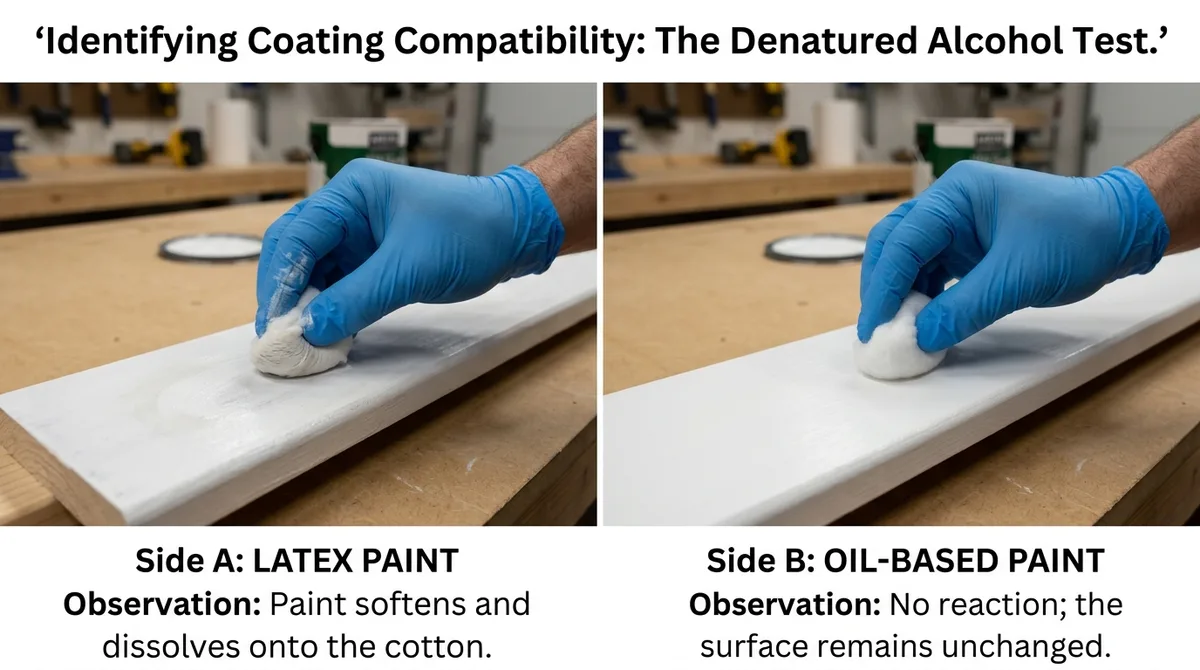
Paint is a waterproof film applied to porous surfaces. When moisture gets behind that film — from rain penetration, plumbing leaks, high humidity, or condensation from inside the wall — it can't escape through the sealed paint layer. The pressure lifts the paint off in strips.
This is why bathroom ceilings, exterior wood exposed to weather, and walls adjacent to leaking plumbing peel first. Fix the moisture source before repainting, or the new coat will fail just as fast.
Cause 2: Poor Surface Preparation
Paint needs a clean, sound, adequately porous surface to bond. The failures the painting-adjacent trades see constantly:
- Painting over dust, chalk, or dirt — the paint bonds to the debris, not the substrate
- Painting over grease or oil — common in kitchens; requires TSP or a degreaser first
- Painting over glossy paint without deglossing — new paint slides off cured gloss unless sanded or primed with a bonding primer
- Painting over damp surfaces — even freshly power-washed walls need days to fully dry, especially in humid climates
Cause 3: Incompatible Coating Systems
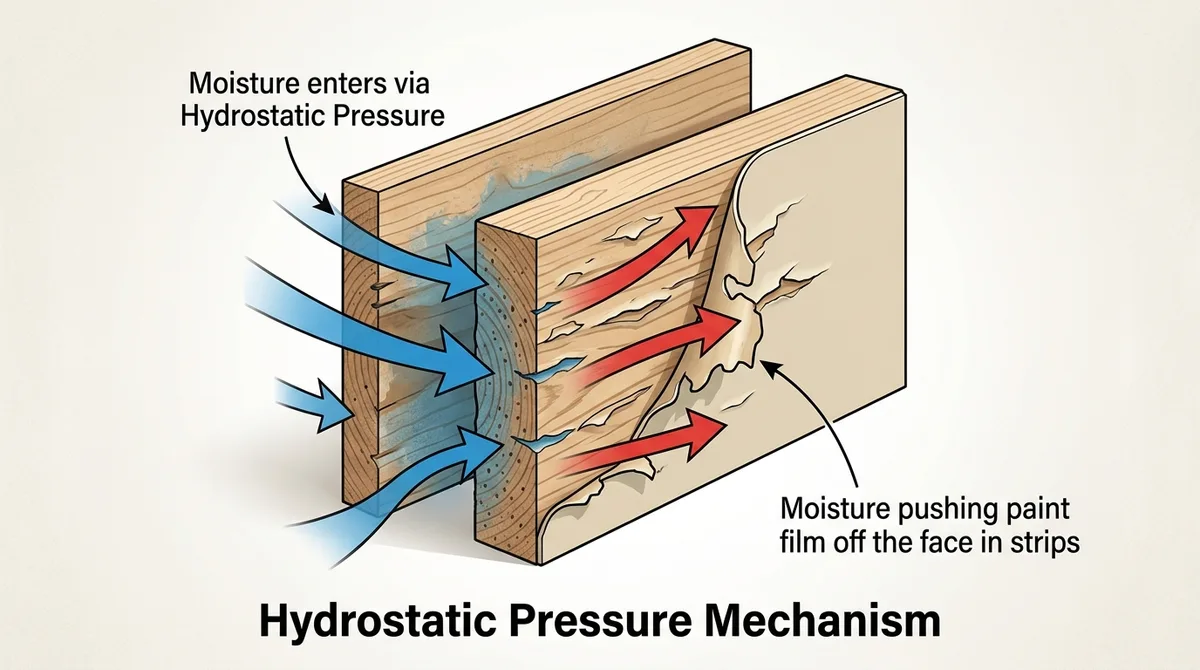
Latex over oil-based paint without proper priming is a leading cause of peeling. Latex expands and contracts more than oil, and if it's applied directly over cured oil paint, the differential movement tears the top layer off.
The denatured alcohol test tells you which you have on the wall: rub the surface with a cotton ball dampened with denatured alcohol. Latex will soften and transfer to the cotton; oil paint won't react. Different treatment for each:
- Painting latex over latex: straightforward; clean and sand as needed.
- Painting latex over oil: sand thoroughly, then apply a bonding primer designed to bridge the two.
- Painting oil over latex: generally works, but the oil coat becomes the failure limit.
The Failure Patterns and What Each Means
| Pattern | Likely cause |
|---|---|
| Large sheets peeling off cleanly | Moisture behind film, or incompatible coats |
| Blisters that pop revealing bare substrate | Painting in direct sun, or moisture eruption |
| Alligator-pattern cracking | Too many layers over time; ready for stripping |
| Chalky powder on surface | UV degradation of low-quality paint |
| Small flakes on exterior wood | Sun/rain cycling, poor prep, or old paint failure |
Environmental Conditions That Kill Fresh Paint
- Painting in direct hot sun: solvent flashes off before the paint can bond; the top skin dries but the underside doesn't. Peels within weeks. Paint the shaded side of the house in morning; the sunny side in afternoon.
- Painting below 50°F or above 90°F: most latex paint doesn't form a proper film outside its rated temperature range. Read the label.
- High humidity above 85%: extends drying time and can trap moisture in the film.
- Rain within 6–8 hours of application: washes uncured paint off or creates surface pockmarks.
What Painting Professionals Emphasize
Trade discussions on painting forums consistently return to two often-skipped steps:
- Primer isn't optional on problem surfaces. Bare wood, patched drywall, previous glossy finishes, and stains all need primer. A "self-priming" paint isn't a substitute on any of them.
- The label's coverage claim assumes ideal surfaces. Real houses have texture, absorption differences, and imperfections. Buy 20% more paint than the label suggests to allow for two proper coats on real surfaces.
How to Fix Already-Peeling Paint
- Diagnose the moisture source and eliminate it (leak, humidity, drainage).
- Scrape all loose paint back to a sound edge with a putty knife or paint scraper.
- Sand the transition edge smooth so the repair blends visually.
- Prime the exposed substrate with an appropriate primer (stain-blocking, bonding, or oil-based depending on the surface).
- Apply two proper coats of quality paint under appropriate conditions.
Frequently Asked Questions
Why does paint peel in the bathroom?
Humidity. Steam from showers condenses on cooler ceiling and wall surfaces, then trapped moisture lifts the paint. Use a bathroom-rated paint with mildewcide, run the exhaust fan for 30 minutes after showers, and address any grout or caulk gaps letting moisture into the wall cavity.
Should I strip all the old paint before repainting?
Not usually. Removing loose paint back to a sound edge and priming is normally sufficient. Complete stripping is only necessary when paint layers are alligator-cracked throughout or when you're trying to reduce lead paint hazard.
Does expensive paint really last longer?
Yes. Higher-quality paints have more solids (pigment and binder) per gallon, which produces a thicker, more durable film. Cheap paint often needs three coats to match one coat of good paint, and it fails faster in UV.