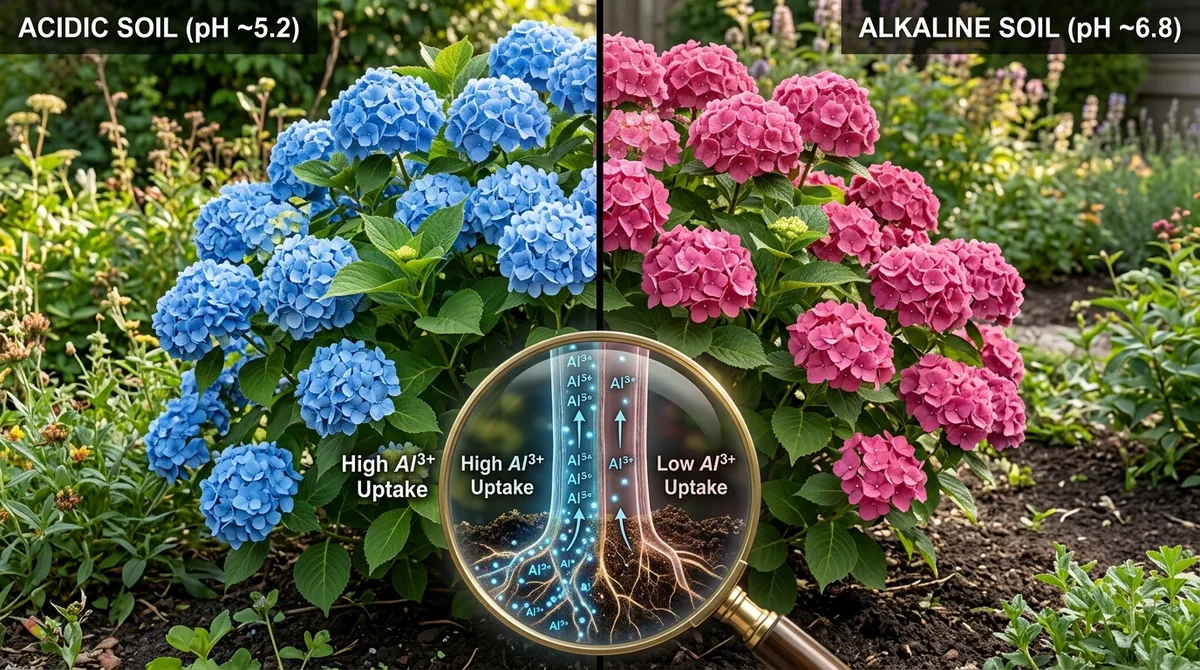
Few garden phenomena confuse homeowners more than watching a pink hydrangea turn blue — or a blue one fade to purple — with no change in variety. The answer is soil chemistry, specifically the interaction between pH and aluminum. But the trick only works on certain hydrangeas, and misapplied it can kill the plant. Here's what's actually happening at the root level.
The Species That Actually Change Color
Only Hydrangea macrophylla (bigleaf/mophead) and some H. serrata (mountain) species change color with soil chemistry. Other hydrangeas — H. paniculata (panicle), H. arborescens (smooth), H. quercifolia (oakleaf) — don't. If you have a white 'Annabelle' or a paniculata like 'Limelight,' no amount of soil amendment will turn it blue.
The Real Mechanism: It's Aluminum, Not pH Directly
The pigment in mophead hydrangea petals is a single anthocyanin called delphinidin. On its own it's pink. When it binds to aluminum ions in the plant's tissues, it turns blue. The color you see is really a question of whether the plant successfully absorbed aluminum from the soil.
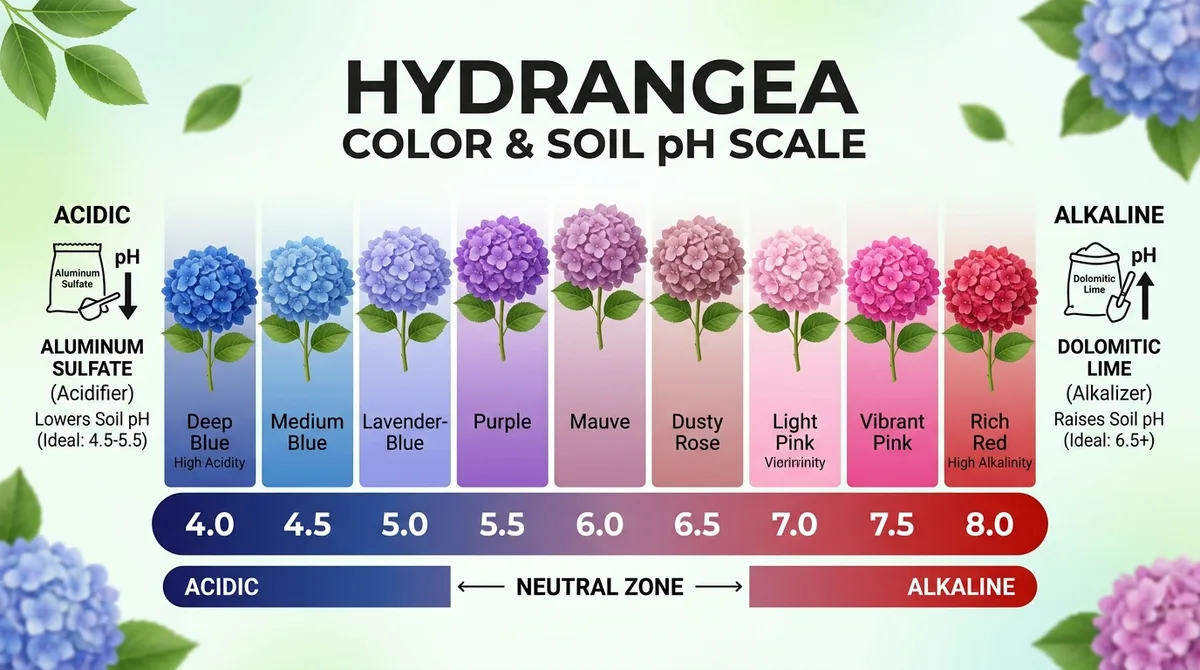
Here's where pH enters: aluminum in soil is only water-soluble (and therefore uptakable by roots) at acidic pH below about 6.0. Above pH 6.0, aluminum bonds with other soil minerals and becomes locked away from the plant. That's why:
- pH under 5.5: deep blue — aluminum readily available
- pH 5.5–6.0: lavender or purple — mixed uptake
- pH 6.0–7.0: pink to mauve — aluminum locked out
- pH over 7.0: vivid pink to red — no aluminum, plus flowers may struggle
How to Change the Color Yourself
To turn a mophead blue (make soil acidic + provide aluminum):
- Apply aluminum sulfate — 1 tablespoon per gallon of water — a few times each spring and fall. It both acidifies and provides aluminum.
- Alternatively, use elemental sulfur or acidifying fertilizers, plus a separate aluminum source.
- Mulch with pine needles or oak leaves — they slowly acidify the soil.
To turn a mophead pink (make soil alkaline):
- Apply dolomitic lime to raise pH above 6.5.
- Use high-phosphorus fertilizer (phosphorus binds aluminum, blocking uptake).
Expect it to take a full season — sometimes two — for changes to fully register. And test your soil pH before amending; blindly adding acidifier can drop pH so low the plant suffers.
The Sudden Color Shifts That Aren't Chemistry
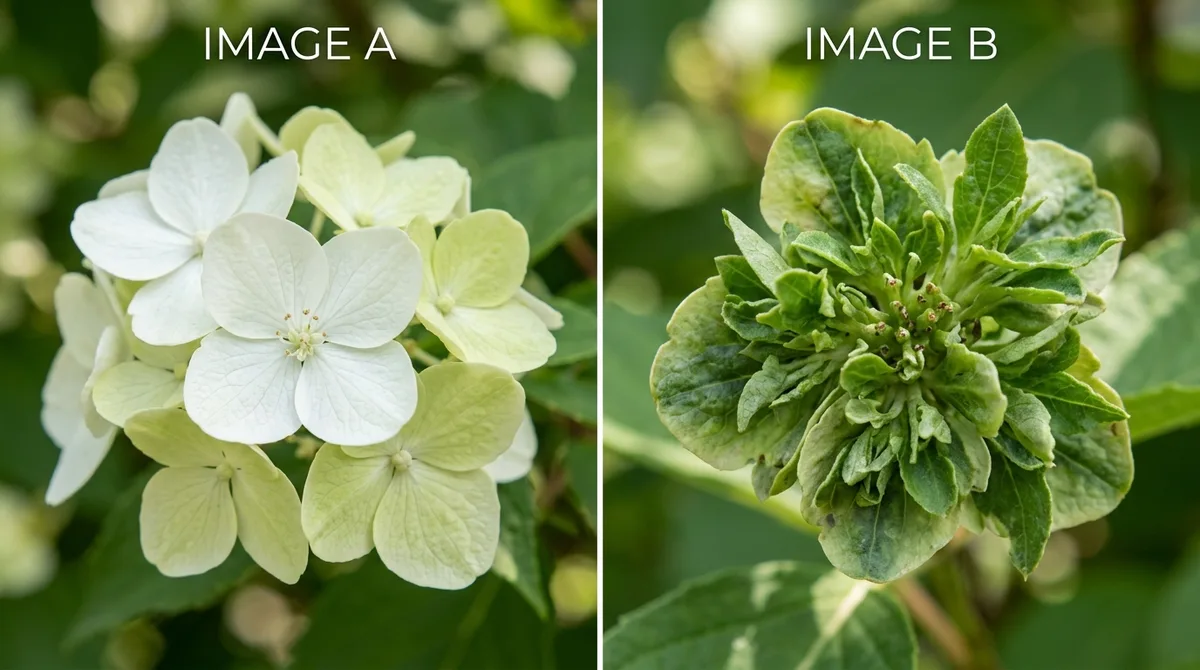
Homeowners sometimes see color shifts that have nothing to do with soil:
- Aging blooms turn green: as petals mature, chlorophyll shows through. A hydrangea shifting from vibrant to dusty green isn't sick — it's just old.
- Sunburn creates brown edges: if the plant is receiving too much afternoon sun in hot climates, petal margins scorch. Move to partial shade or shade cloth.
- Drought stress fades colors: inconsistent watering dulls whatever color the plant was producing.
- Frost causes bud damage: late frosts destroy the flower buds and the plant may skip a bloom cycle entirely.
What Gardening Communities Get Right
Experienced growers on gardening forums emphasize two nuances the marketing labels skip:
- Purple is the hardest color to hold. Purple mopheads require pH between 5.5 and 6.0 — a narrow window that shifts easily with rain and fertilizer. Most "purple" hydrangeas drift toward blue or pink over seasons.
- Container plants change color faster. Contained soil equilibrates quickly with additions, so pot-grown hydrangeas can shift color within a single season while ground-planted specimens take much longer.
Frequently Asked Questions
Do coffee grounds turn hydrangeas blue?
Mildly. Coffee grounds are slightly acidic but decompose slowly and provide no aluminum. They're a supplement, not a substitute for aluminum sulfate.
Can white hydrangeas turn blue?
No. White hydrangeas (H. paniculata and H. arborescens varieties) don't produce the delphinidin pigment and therefore can't turn blue or pink. They may fade to green or dusty pink as blooms age, but that's not chemistry-driven.
Why did my blue hydrangea turn pink after moving houses?
The new soil's pH is different. Suburban soils near concrete foundations often trend alkaline because of concrete's calcium carbonate. Test the soil and amend as needed to restore the color.